Louisville, Colorado
Dryer Vent Cleaning in Louisville, CO
We clear the lint trail from behind your dryer to the hood outside, then confirm the air moves freely before we leave.
What's your dryer vent doing?

- Firm Quote FirstApproved by you before any work
- 90-Day WarrantyParts & labor
- Open 24/7Same-day service often available
- Local & Family-OwnedBased in Superior
Dryer Vent Repair • Louisville
A Quiet Pipe With a Big Job in Every Louisville Laundry Room
A clothes dryer is really two machines working together: the one that heats the drum, and the vent that carries the wet air away. When the vent is clear, a load of towels dries in a single cycle and the laundry room stays cool and quiet. When it is clogged, the dryer runs longer and hotter, your electric or gas bill creeps up, and the heating parts take the punishment. We clean the full exhaust path, from the transition duct behind the machine through the vent run to the exterior hood, and we test the airflow at the end so you know it worked.
We're a small, family-owned outfit based right here in Superior, which puts Louisville just a short drive from our office instead of a long trek across the map. Our technicians work in single-family houses, condos, townhomes and rentals around Historic Downtown Louisville and throughout the 80027 ZIP code, and we describe what we find in everyday language. The $85 diagnostic visit is credited toward the repair if the dryer needs more than a cleaning, and any work is backed by a 90-day parts and labor warranty. Same-day service is often available, though we never promise it, and you can book online or call or text (720) 285-3573.
Right Now
Cabinet Feels Hot or Smells Like Burning? Start Here
Take these quick general safety steps first, before thinking about cleaning or repair; they only need a minute.
31%
Home dryer fires where failure to clean was the leading factor (2018–2020)
Wall outlet
Plug major appliances in directly — never an extension cord
- 1Stop the dryer and shut off the powerShut the dryer off, then unplug it or flip off its breaker so it can't start back up by itself.
- 2Smell gas? Step outsideIf you smell gas near a gas dryer, stay away from switches, outlets and the dryer itself; leave the house right away, and once you're outside, call 911 or your gas utility.
- 3Keep it turned off until someone has inspected the ventThe U.S. Fire Administration reports that failure to clean, at 31%, was the leading factor contributing to the ignition of home clothes dryer fires from 2018 to 2020, based on National Fire Incident Reporting System data.
- 4Clear the area, then reach usMove baskets, clothes and cleaning products away from the machine, and once things are safe, book online or call or text (720) 285-3573.
Source: U.S. Fire Administration — Appliance and Electrical Fire Safety.
Common Problems
Signs in Your Laundry Room That the Vent Is the Problem
Each symptom below points to a common vent problem, and your technician confirms the actual cause with an inspection and airflow test before giving you a quote for any work.
Towels come out damp after a full cycle
- Likely causes
- When lint builds up along the vent or the transition duct behind the dryer gets crushed flat, moist air can't get out of the drum.
- What we check
- We look at the lint screen, the duct behind the machine, how long the run is and whether the exterior hood is restricted.
- Typical fix
- We remove the lint from the full path, replace a crushed or sagging transition duct if needed, and test the airflow at the hood.
Laundry room feels warm and muggy
- Likely causes
- If exhaust has nowhere to go, it collects inside the cabinet and leaks into the room, often because the hood is blocked or a duct has slipped loose from its collar.
- What we check
- We inspect every joint and connection, look for lint blowing out around seams, and confirm the hood opens.
- Typical fix
- We clear the blockage, reconnect or reseal loose joints, and verify the air now leaves the house.
Faint scorched smell during a load
- Likely causes
- When lint collects near the heater or gets trapped in a narrowed duct, it can start to scorch, so treat that smell as a serious warning.
- What we check
- We stop the dryer, inspect the heater area and the vent for lint buildup, and check the duct material.
- Typical fix
- We remove the lint, replace damaged ducting where needed, and recommend the dryer stay off until the path is clear.
Dryer shuts off with time still left on the timer
- Likely causes
- When air can't flow freely through the vent, the drum just keeps heating up until a high-limit thermostat cuts the heat or a thermal fuse blows open.
- What we check
- We test airflow first, then check the thermostat and thermal fuse, since a blown fuse is often a symptom of a restricted vent.
- Typical fix
- Once the vent is cleared, we swap in a genuine OEM part if a fuse or thermostat turns out to be burned out.
Display shows an airflow or vent code
- Likely causes
- Many newer dryers sense high exhaust pressure and display a warning whenever lint, a kinked duct or a blocked hood is holding back the airflow.
- What we check
- We read the code, measure airflow at the end of the run, and look for a pinched duct or a blocked exterior hood.
- Typical fix
- We clear the restriction, correct a kink or crush, and confirm the code no longer returns on a test cycle.
Outdoor flap barely moves
- Likely causes
- Lint, a bird nest, a fine screen or winter ice can hold the exterior hood closed or nearly closed.
- What we check
- We watch the flap during a test load, then inspect the hood for nesting material, packed lint and screens.
- Typical fix
- We clear the hood, remove a clogging screen if one is present, and make sure the flap swings freely.
Roof, Wall & Long Vents
Where Your Exhaust Goes Decides How We Work
How easy a vent is to clean depends on how straightforward its path is, so here's what each kind of layout means for the work and where your share of the job stops.
A Quick Run Out an Exterior Wall
With the dryer placed against an outside wall, the vent usually exits almost straight through, a layout that's easy on airflow and simple to clean. Lint has fewer places to catch, so buildup tends to be slower and the whole run is easy to reach with brushes and a vacuum. Homeowners can safely clear the lint screen and watch the outside flap during a load, and anything behind the machine is worth leaving to us.
Long Runs, Roof Caps and Many Turns
A vent that runs through an attic or finishes at a roof cap has to push damp air upward, and every elbow along the way gives lint one more place to settle. Long or winding runs need specialized tools to reach the far end, and the roof cap is a spot many people never think to inspect. If your vent is long or turns several times, expect it to need attention more often than a short one, and call us rather than guessing.
Shared Walls and Stacked Machines
In Louisville condos and townhomes, the vent is sometimes routed sideways through a shared wall or up through a ceiling to reach an outside wall, which can put the hood far from the laundry closet, much farther than you'd guess. With a stacked washer and dryer, there's only a tight space behind them for the transition duct, so it's easy for that duct to get crushed or kinked. Moving a stacked pair is not a casual task, so if the airflow seems poor, leave the machines in place and let us work around them.
How a Clogged Vent Wears Down Your Dryer
If exhaust has nowhere to go, every load takes longer and runs hotter, and the extra heat wears on the heating element, the thermostats and the thermal fuse. On a gas dryer, restricted exhaust can also leave the burner struggling. A clean vent protects those parts, shortens each cycle, and is often the cheapest repair a dryer will ever need.
From Our Own Jobs
Real Dryer Vent Repairs From Our Own Jobs
Real photos from our own service calls around the Denver Metro Area — not stock images.
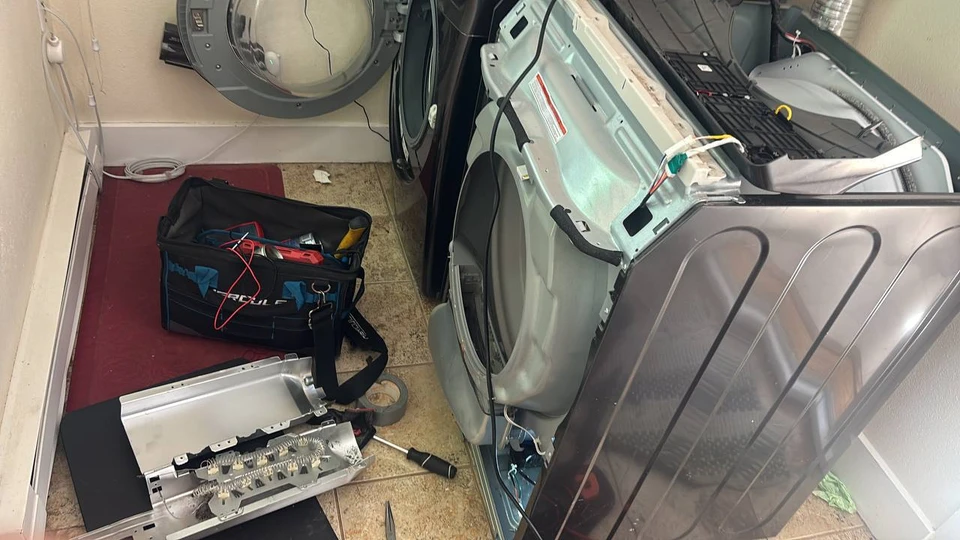
Dryer opened up, heating element assembly out for testing 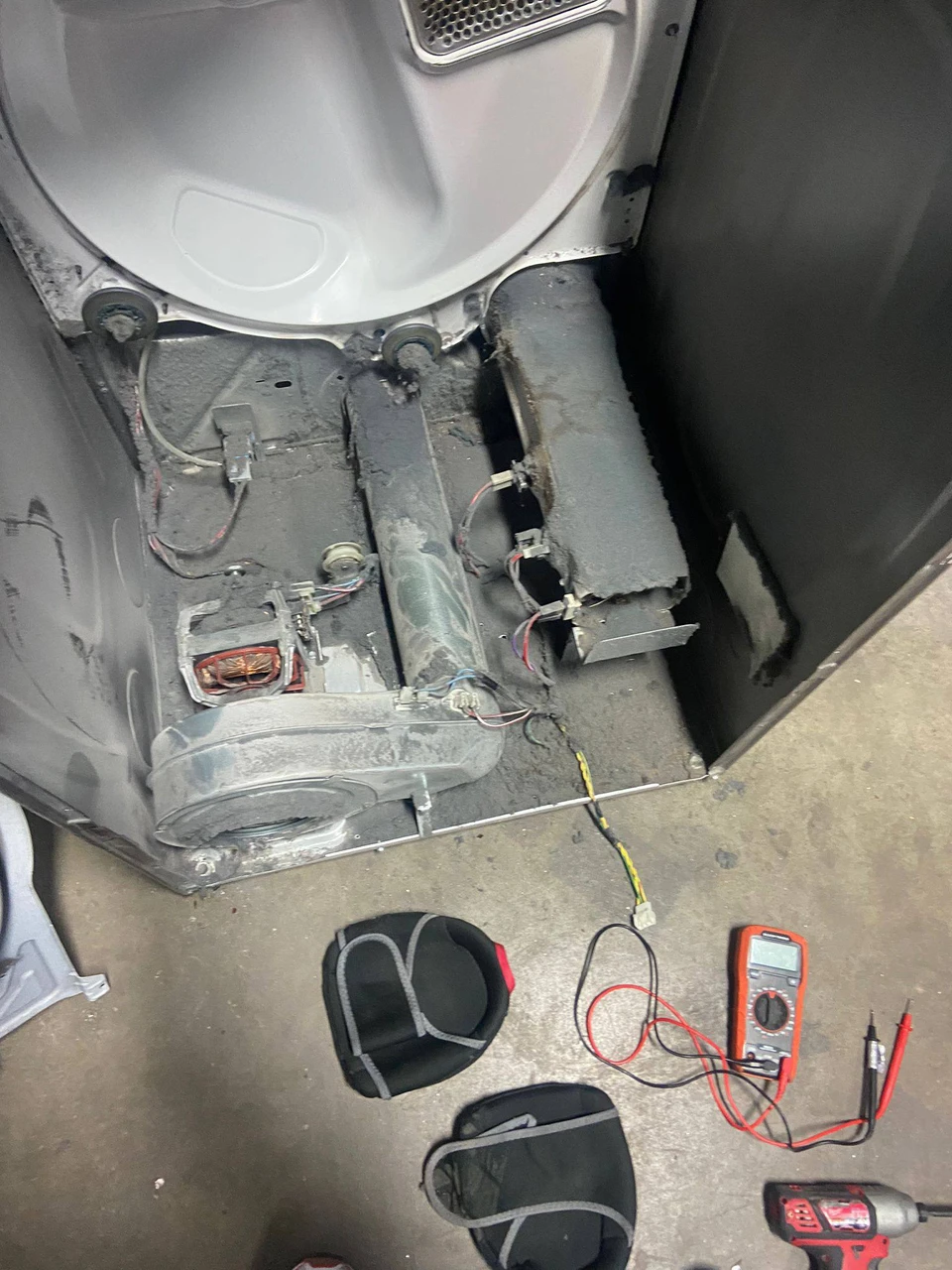
Lint everywhere inside the cabinet — testing parts with a multimeter
Recognize the Problem?
Book Dryer Vent Cleaning in Louisville
Tell us what's happening — we'll call you back to confirm a time.
(720) 285-3573Louisville Homes
How Louisville's Homes and Weather Shape a Dryer Vent
A few real facts about this town, read through how dryer vents behave in general, explain what your technician pays attention to here.
Rebuilt Homes and Brand-New Dryers
After the Marshall Fire in December 2021, many of the homes in Louisville that were lost have been rebuilt, and those new houses often come with brand-new appliances. A new dryer is only as good as the vent behind it, and construction leaves its own hazards: drywall dust, a transition duct crushed while the machine was slid into place, or a vent that was never fully connected. A fresh install is a smart time to confirm the exhaust path is open before years of lint begin to settle.
Older Homes Around Historic Downtown
Houses around Historic Downtown Louisville, near Steinbaugh Pavilion, were built long before dryers were common, so a laundry room there is often a later addition. Vents in that situation may take an awkward route through a basement, a crawl space or an added closet, with extra turns that give lint more places to collect. We look at the whole run, not just the end near the machine, so a long or crooked path gets the attention it needs.
Dry Air at 5,401 Feet
At roughly 5,401 feet, Louisville gets the dry Front Range air that hangs around for much of the year. Dry air does help clothes dry quickly when the vent is clear, which makes a slow load here an honest warning sign rather than something to blame on humidity. Cold months bring their own risk, because ice, snow or a nest can hold the outside flap shut, so the hood gets as much of our attention as the duct inside.
Before You Call
Simple Look-Overs You Can Do Yourself
- 1Give the lint screen a good rinse now and then, rather than just pulling the lint off.Even a screen that looks clean can be blocked by a waxy film from dryer sheets, and washing it in warm soapy water clears it.
- 2Stand at the outside hood during a loadSteady warm air and a flap that swings open tell you exhaust is moving, but a flap that stays shut suggests lint, ice, snow or a nest.
- 3With the power switched off, take a quick look behind the dryer.Unplug the machine, slide it forward only as far as the cord will reach, and check whether the transition duct is pinched, kinked or squashed against the wall.
- 4Check what kind of duct you haveFlimsy foil or plastic ducts sag and crush easily, so letting us know your duct type helps your technician bring the correct replacement.
- 5Time a normal loadHas a normal load started taking clearly longer to dry than before? Mention that change when you book, since it's helpful to know.
What to Expect
From Doorstep to Fresh Airflow
During your scheduled window, your technician shows up, inspects the dryer, transition duct, full vent run and exterior hood, and shows you what's restricting the airflow before quoting a firm price. Once you approve, we clear the lint, test the airflow at the end of the run and check that the dryer is moving air the way it should.
- Diagnostic visit
- $85Credited toward the repair if you go ahead
- Your price
- Firm quoteApproved by you before any work
- Warranty
- 90 daysParts and labor
- Parts
- Genuine OEMMatched to your model number
Google Reviews
What Our Customers Say
5.0Every review on Google is five stars.
“Nick was great. Quickly narrowed down our likely washer problem and got the part ordered with deposit. Quick install and had washer working within few hours once part arrived. Great communication throughout. Would definitely use again!”
Nathan H.August 2026 · Google “Nick, the owner, is prompt, competent, persistent to make sure repair is complete, transparent and knowledgeable. I highly recommend his service.”
Stephen F.July 2026 · Google “Nick was great! Professional, fair and arrived same day. Walked me through everything and with no surprises. I highly recommend him.”
Michael D.July 2026 · Google
Membership
PointLine Care Club
One service call is $85. For $99 a year, every service call is free.
- Free service calls all year — no $85 fee
- 1 free maintenance visit a year
- 10% off labor on every repair
$99/ year
One household · renews yearly · cancel anytime before renewal
Property manager or landlord? See our Property Care Club →
Service Area
Louisville ZIP Codes We Serve
Dryer Vent Cleaning at homes, condos and rentals in every part of Louisville.
- 80027
Including Historic Downtown Louisville.
FAQ
Vent Questions From Around Louisville and 80027
Dryer Vent questions from Louisville homeowners.
Do you handle dryer vent cleaning in the 80027 ZIP code?
Yes, we cover all of Louisville, including 80027 and the neighborhoods around Historic Downtown Louisville. Our office is in nearby Superior, so we're your neighbors, not a dispatch center far away. Book online or call or text (720) 285-3573 and we will confirm a time.
Our house was rebuilt after the Marshall Fire; does the new vent still need to be checked?
It can, because a new vent is only clean if it was installed and connected properly. Construction dust, a crushed transition duct or a loose joint can restrict airflow from day one. A quick inspection confirms the path is open before lint starts to build.
Our dryer vents through the roof; can you clean that?
Yes, long runs and roof exits are part of the work we do. A vent that rises through an attic has more elbows where lint settles, so it tends to need attention more often than a short wall vent. We clear the full path and test the airflow at the roof cap.
Does the dry Louisville air make lint worse?
Dry air doesn't make more lint, but it does tend to create static that lets fine fibers stick to the duct walls. At roughly 5,401 feet, clothes also dry fast when the vent is clear, so a sluggish load here is a genuine warning sign. If drying times have grown, the vent is the first place to look.
I have a rental unit in town; should I get a cleaning between tenants?
Yes, since a vent's cleaning record usually doesn't move along with the tenant. Scheduling a visit between leases gives the next household a clear exhaust path and leaves you with a clear record of the vent's condition. It also catches a crushed duct or a blocked hood before it turns into a complaint.
How can I tell whether to schedule soon or call right away?
If the dryer feels very hot or you smell burning, stop it, unplug it and call right away. If drying is only slower than it used to be, book a visit soon rather than waiting for the problem to grow. If you smell gas near a gas dryer, leave the house and call 911 or the gas utility once you're outside.
More in Louisville
Other Repairs We Handle in Louisville
- Refrigerator Repair in Louisville
- Freezer Repair in Louisville
- Ice Maker Repair in Louisville
- Wine Cooler Repair in Louisville
- Washer Repair in Louisville
- Dryer Repair in Louisville
- Dishwasher Repair in Louisville
- Oven Repair in Louisville
- Wall Oven Repair in Louisville
- Range & Stove Repair in Louisville
- Cooktop Repair in Louisville
- Microwave Repair in Louisville
- Range Hood Repair in Louisville
- Garbage Disposal Repair in Louisville
- Commercial Appliance Repair in Louisville
Laundry taking twice as long lately?
Book online or call or text (720) 285-3573, and a family company from Superior will open up the path from your dryer to the outdoors.