Louisville, Colorado
Washer Repair in Louisville, CO
Drain pumps, door locks, worn bearings and tired hoses, traced and fixed by a family company based one town over in Superior.
What's your washer doing?

- Firm Quote FirstApproved by you before any work
- 90-Day WarrantyParts & labor
- Open 24/7Same-day service often available
- Local & Family-OwnedBased in Superior
Washer Repair • Louisville
Laundry Help From the Town Next Door
Most people only notice their washer when it stops. Maybe the lid won't unlock, maybe the drum is sitting under gray water, or maybe there is a faint puddle creeping toward the baseboard. Whether it's a front-load, top-load, stacked or compact washer, we repair them in Louisville houses, condos and rentals. Your technician tests the machine where it stands and gives you a firm price before any work begins.
PointLine is a small, family-owned company, and our office sits on S Rock Creek Pkwy in Superior, so Louisville is practically next door. A washer deserves a careful repair because one weak part tends to wear out the next. A drain pump that struggles stresses the motor. A slow leak softens subfloor, and worn shocks can hammer the bearings. Finding the real cause, then fixing it with genuine OEM parts, is what keeps the machine running for years.
Right Now
Washer Leaking or Stuck Full? Do This Before Anything Else
These general safety steps contain the water and give your technician a clear head start.
- 1Stop the Machine and Pull the PlugHit pause or cancel and unplug the washer before you reach into the drum or step into any water on the floor. If the plug sits in a puddle or the outlet is hard to reach safely, switch off the breaker for that circuit first.
- 2Turn Off the Water SupplyShut off the hot and cold valves behind the washer by turning each one clockwise until it's snug. That stops any further fill and takes the pressure off a hose or valve that may be leaking.
- 3Drain Slowly, and Only by the ManualIf your owner's manual explains how to drain through the pump filter or a small drain hose near the floor, go slowly, drain into a shallow pan, and put towels around it. If the manual doesn't cover it, leave the water in place and let your technician take care of it.
- 4Dry the Floor and Photograph the TagMop up any standing water, and move rugs and damp items away from baseboards, cabinets and flooring seams. Next, snap a clear photo of the model and serial tag, usually found inside the door or lid or on the back, so we can check on parts before we show up.
Common Problems
Washer Problems, From the First Warning Sign to the Finished Repair
These are the usual causes, based on how washers are built. Your technician tests the actual parts on your machine before naming a fault or quoting a price.
Tub still full when the cycle ends
- Likely causes
- Water that won't leave the tub is usually held back by a clogged pump filter, a kinked or blocked drain hose, or a drain pump that has given out.
- What we check
- We check the filter and hose path, then test the pump for power and listen for a motor that runs but doesn't move water.
- Typical fix
- Clearing the blockage or replacing the drain pump usually gets water leaving the drum again.
Laundry comes out heavy and soaked
- Likely causes
- If the drum never gets up to speed, the cause may be a door or lid lock that won't engage, a worn drive belt, a failing motor control board, or tired shocks and suspension.
- What we check
- We confirm the lock signals closed, inspect the belt and suspension, and read the control's fault history where the model allows it.
- Typical fix
- The fix is usually a new lock assembly, belt, shocks or motor control, depending on what testing shows.
A puddle in front of or under the machine
- Likely causes
- Leaks most often come from cracked inlet hoses, a torn door boot on a front-loader, a leaking pump, or a worn tub seal.
- What we check
- We run a fill and drain while watching each connection, then trace water marks back to where they start.
- Typical fix
- Replacing the hose, boot, pump or seal stops the leak, and we check the area afterward for any remaining seepage.
Pounding, grinding or a machine that walks
- Likely causes
- An unbalanced load is the simplest explanation, yet worn shock absorbers, broken suspension springs or failing drum bearings can make just as much noise.
- What we check
- We spin the drum by hand for roughness, check the suspension, and confirm the washer sits level on all four feet.
- Typical fix
- Leveling and new shocks or springs handle most cases, and worn bearings call for a frank talk about whether the repair makes sense.
Dark panel or nothing happens at Start
- Likely causes
- When a washer sits dead, look for a tripped breaker, an outlet with no power, a lid switch or door lock that never registers as closed, or a failed control board.
- What we check
- We verify power at the outlet, test the door circuit, and check the board's inputs and outputs before blaming the most expensive part.
- Typical fix
- Most repairs here are a switch, a lock or a control board, replaced with genuine OEM parts.
A sour smell or a code that keeps coming back
- Likely causes
- Mildew feeds on leftover residue and moisture in a front-loader's door boot, pump filter or drain path, and codes that repeat often trace back to fill, drain or lock faults, such as an inlet valve clogged with scale.
- What we check
- We look up the code for your model, inspect the boot and filter, and check inlet screens and valve flow.
- Typical fix
- Cleaning the drain path, replacing a scaled valve or fixing the fault behind the code usually clears both the smell and the error.
Hoses, Drains & Leaks
Keeping Water in the Pipes and Off the Floor
Washer water damage usually begins at the hoses, valves and drain behind the machine rather than inside the tub. Here is what's worth watching and where a homeowner's part of the job should end.
Supply Hoses Deserve a Regular Look
The hot and cold inlet hoses carry water pressure whenever the valves are open, even on days when the washer isn't running. Every so often, slide the machine out and check the hoses for bulges, cracks, stiffness or rust at the fittings. Follow your manufacturer's guidance on when to replace them, and know that many people choose braided hoses for extra peace of mind. A hose that looks swollen should be replaced before it fails, not after.
Valves, Drain Hose and Standpipe
Find your two shutoff valves before you ever need them, and turn them gently once in a while so they don't seize. Hook the drain hose firmly into the standpipe, but don't push it too far down, since that can siphon water out in the middle of a fill. Behind the machine, the hose shouldn't be pinched or bent sharply against the wall. A standpipe that gurgles or backs up is a plumbing issue, not a washer fault, and it's worth telling your technician about.
Door Boots, Pump Filters and Inlet Screens
A front-loader's rubber door boot catches water, lint, hair and stray coins, so wipe out its folds after heavy loads and leave the door cracked between washes. Many front-loaders hide a pump filter behind a small panel near the floor, and your owner's manual shows how to clean it safely. Any tap water carrying dissolved minerals can slowly scale the small screens where the hoses connect, and that can slow fills and trigger fill codes. Your technician cleans or replaces those screens and checks the inlet valve whenever filling seems sluggish.
Upper Floors, Condos and Knowing When to Stop
When the laundry sits above a finished room or shares a wall with a neighbor, a small drip can become a stained ceiling surprisingly fast. A drain pan with a proper outlet and an occasional glance behind the machine are both worth the effort. Wiping gaskets, cleaning a filter your manual describes and checking hoses are safe homeowner tasks. Once the job means removing panels, reaching wiring or replacing a pump or valve, it's time to call us.
From Our Own Jobs
Real Washer Repairs From Our Own Jobs
Real photos from our own service calls around the Denver Metro Area — not stock images.
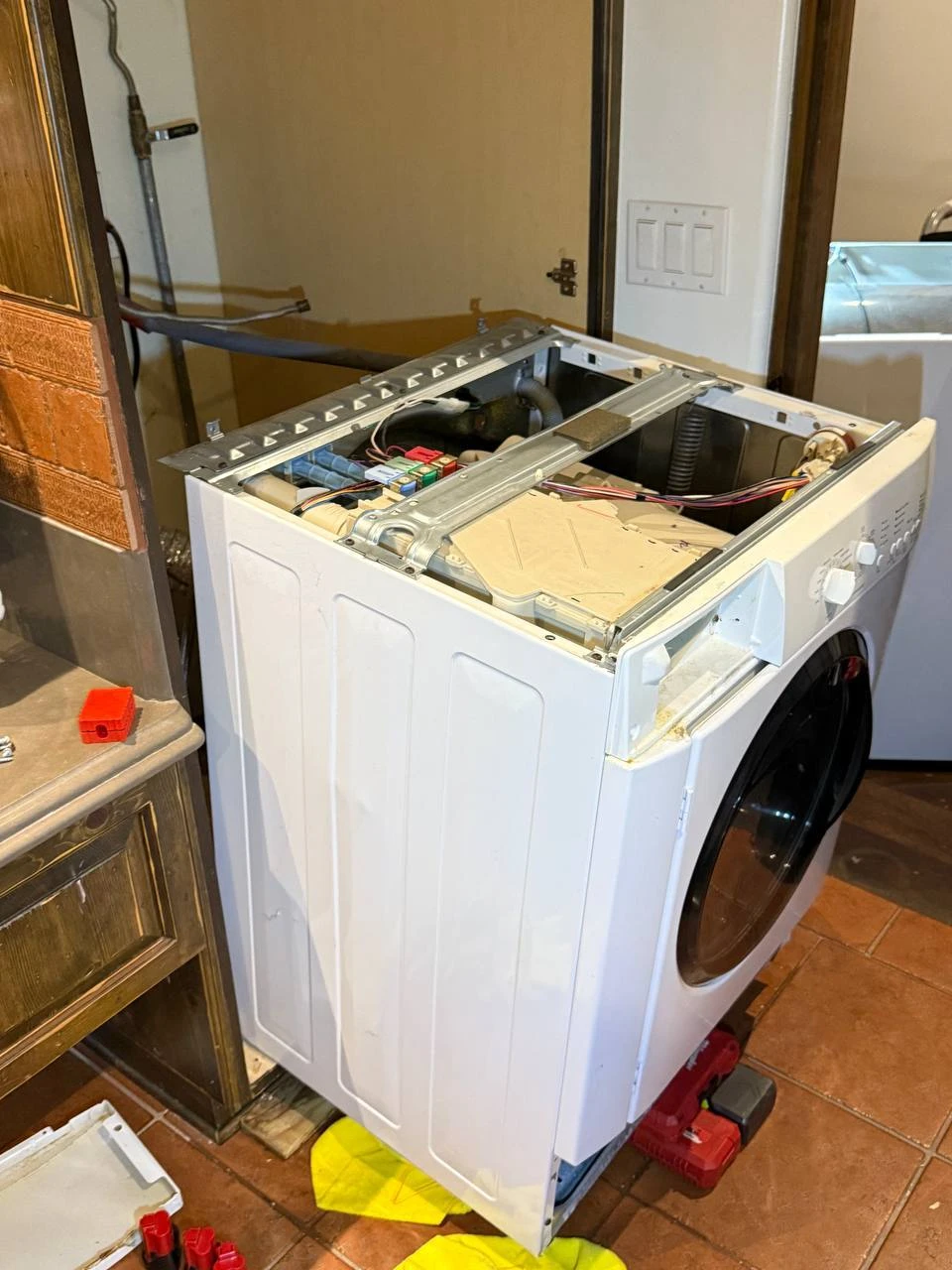
Compact washer pulled out of its closet, top panel off 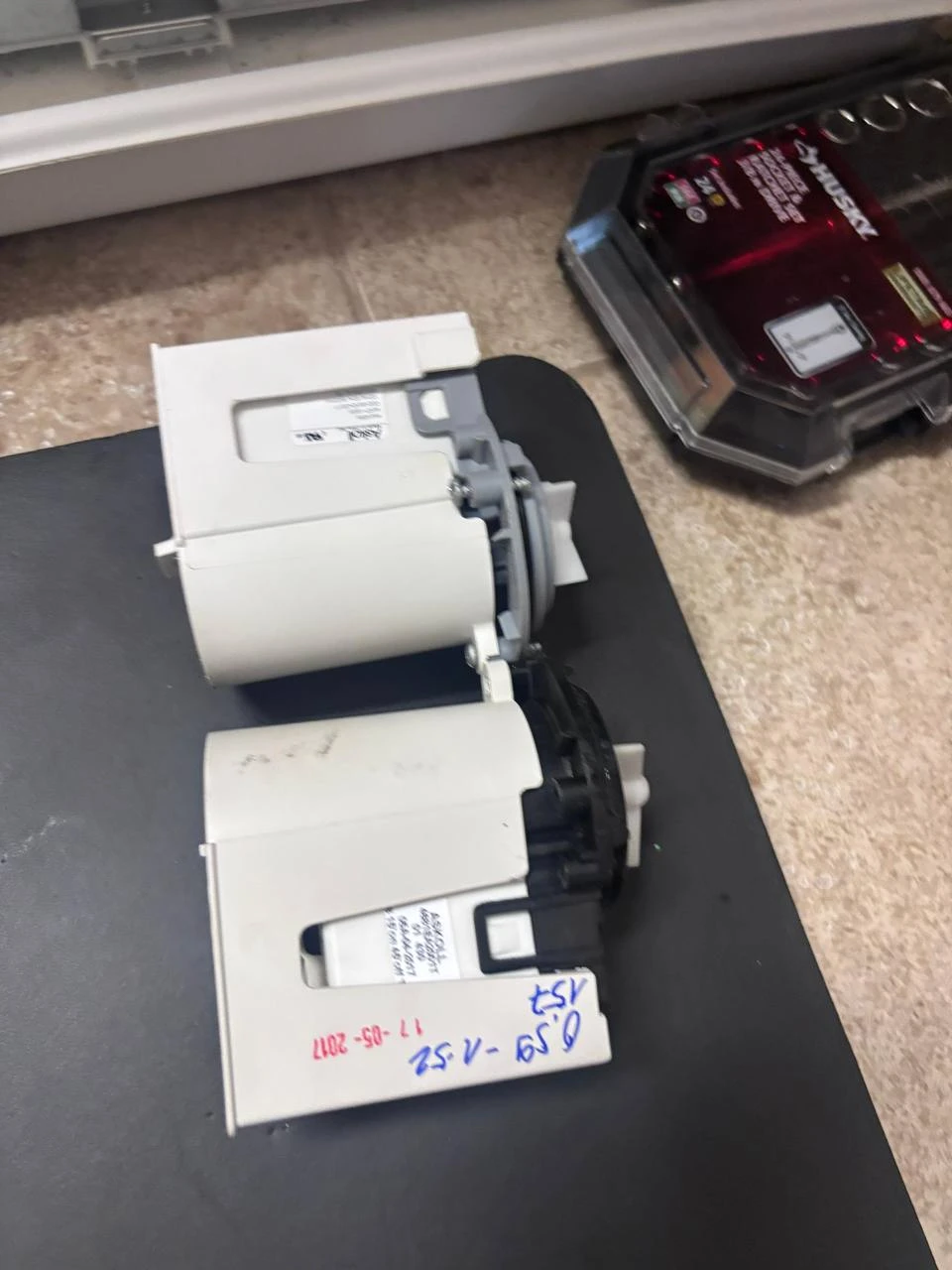
Drain pumps side by side during a replacement 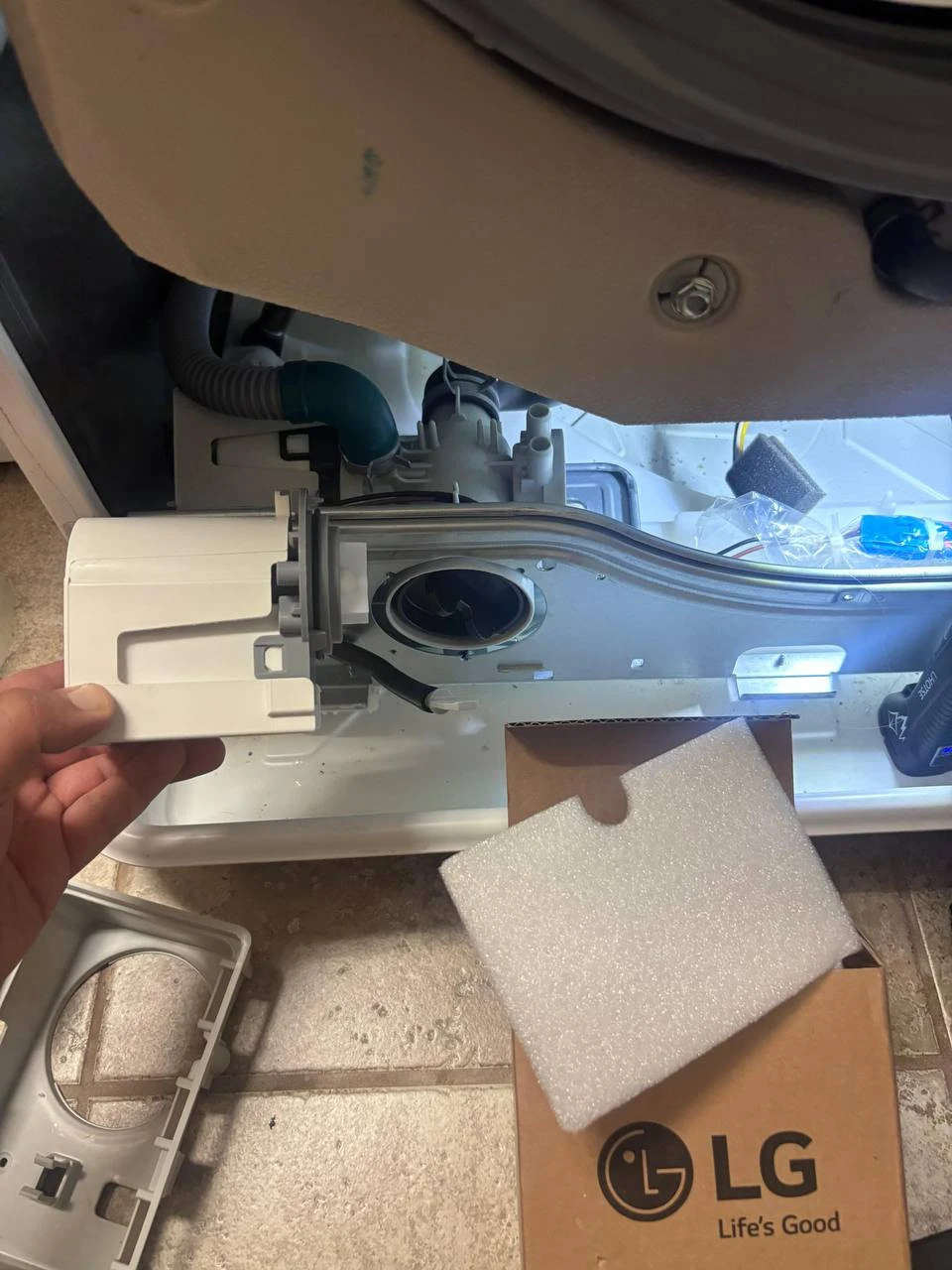
New genuine LG drain pump going in
Recognize the Problem?
Book Washer Repair in Louisville
Tell us what's happening — we'll call you back to confirm a time.
(720) 285-3573Louisville Homes
What Local Homes and Habits Mean for Your Washer
A few real features of this town shape how washers are installed, how hard they work and what your technician checks first.
Rebuilt Homes, Brand-New Machines
The December 2021 Marshall Fire destroyed hundreds of homes in Louisville, and many of them have been rebuilt with brand-new appliances. A new washer can still have problems, and in the early months the cause is often in the installation rather than a worn part. A drain hose can get pushed too deep into the standpipe, a supply hose can be crimped behind the cabinet, or the leveling feet can be left unadjusted. Newer machines also rely on control boards and sensors, so we work from model-specific diagnostics instead of guesswork.
Historic Downtown and Older Laundry Corners
Around Historic Downtown Louisville, near Steinbaugh Pavilion, homes have been updated many times, and laundry plumbing sometimes lags behind the appliance. Shutoff valves that haven't been turned in years can stick or weep. Older standpipes can drain slowly, and a tight corner can leave little room for a modern front-loader. Your technician looks at the valves, the drain and the way the machine sits, because a new part won't last long if the surrounding setup keeps working against it.
Trail Mud, Thin Air and Shared Machines
With miles of trails running through Louisville, plenty of loads come home full of mud, sand and burrs, and that grit ends up in pump filters and door boots. At 5,401 feet the altitude barely affects a washer, since it burns no fuel. Dry air does work on rubber, though, so supply hoses and door gaskets deserve a look as they age. In rentals, one machine often serves several people and different laundry habits, which makes overloading and missed filter cleaning more likely.
Error Codes
Washer Error Codes by Brand
Official codes from each manufacturer, with what to try first, are on our washer repair page. Common ones at a glance:
Samsung
4C · nd · Ub and more
LG
OE · IE · UE and more
Whirlpool
F9 · F8 · F5 and more
Maytag
F9 · F5 · Sud and more
GE
dE · Po and more
Bosch
E18 · E17 · E16 and more
Haier (washer/dryer combo)
Err2 · Err5 · Err1 and more
Repair or Replace?
Is This Washer Worth Fixing One More Time?
The typical washer lifespan from an NAHB study, shown beside this section, gives you a rough yardstick, but the calendar is only part of the decision. A newer machine with a failed pump, lock or belt is usually a straightforward repair. As a washer nears the end of that range, weigh the repair price against a new unit and ask whether other parts, especially drum bearings and the tub seal, are starting to wear. Your technician tells you plainly what else they notice so you aren't paying to fix one part while another is close behind.
Some situations clearly favor repair. A washer fitted into custom cabinetry, stacked in a closet built around its exact size, or paired with a dryer that still runs well can cost more to replace once you count carpentry or a new matched set. Energy and water use matter too, since an older top-loader may use more of both than a newer model. Parts availability matters as well, and if genuine parts for an older model are hard to find, we'll say so before you spend anything.
Typical washer lifespan
~10 yrs
Source: NAHB study. Real life varies with brand, use and maintenance.
Built-In & Luxury
Stackables, Combos and European Washers in Close Quarters
Condos, townhomes and small laundry closets often call for compact washers, stacked washer-dryer pairs or all-in-one combo units, since a side-by-side set won't fit. Working on them takes patience. A stacked dryer may need to come down safely, a compact machine has to slide out without scraping the floor or catching its hoses, and the stacking kit should go back on exactly as designed. Your technician protects floors and trim, then checks that the hoses, vent and power cord aren't crushed once everything goes back in place.
European washers from Bosch, Miele and ASKO are carefully engineered, with their own diagnostic routines, heating elements on many models, and parts made for each specific model. Generic substitutes may not fit, seal or communicate with the control properly, so we use genuine OEM parts. Many of these machines store fault history that points straight at the problem once you know how to read it. That helps your technician repair a compact premium washer in a tight closet without guesswork or a second trip for the wrong part.
Before You Call
A Few Safe Checks Before You Book
- 1Test the outlet and look at the breakerA tripped breaker or a popped GFCI outlet can make a perfectly good washer seem dead, and resetting it takes just a moment.
- 2Shut the door or lid with a firm pressMost washers won't fill or spin until the lock confirms the door is closed, and a sleeve caught in the seal is enough to stop the cycle.
- 3Make sure both water valves are fully openIf a valve was left partly closed after plumbing work, you may see slow fills and fill codes that look like a failed part.
- 4Straighten out the drain hose behind the machineA hose pinched against the wall holds water in the drum and can keep the spin cycle from ever starting.
- 5Balance the load and steady the feetA single soaked blanket bunched to one side can halt the spin or set off banging, and a washer that rocks needs its leveling legs adjusted.
Brands
Washer Brands Your Technician Knows
We work on everyday machines from Whirlpool, Maytag, GE, LG, Samsung and Electrolux, plus European washers from Bosch, Miele and ASKO. Choose your brand below for model notes and common fault codes.
What to Expect
How a Washer Visit Goes
Your technician shows up within the window you picked, asks what you've noticed, and tests the washer right where it sits to find what actually failed. You'll get a plain explanation and a firm quote, and nothing begins until you say yes.
- Diagnostic visit
- $85Credited toward the repair if you go ahead
- Your price
- Firm quoteApproved by you before any work
- Warranty
- 90 daysParts and labor
- Parts
- Genuine OEMMatched to your model number
Google Reviews
What Washer Repair Customers Say
5.0Every review on Google is five stars.
“Excellent service! Nick is a very knowledgeable and skillful appliance repair master. He was on time, well-prepared, clean, and respectful of my home. He was able to diagnose the problem with the Maytag front-load washing machine within minutes. Nick clearly explained the repair and cost before starting the repair. The machine was working normally within 15 minutes after his arrival. I am particularly impressed by his honesty! Instead of trying to sell me a replacement of the computer chip that created the problem with the washer he simply reset it and it has been working fine. In addition he patiently explained and showed me how to reset it myself in the unlikely event it happens again. It has been a month since he repaired it and the machine has been working without any problems. My appliance is working perfectly again, and the price was fair. I highly recommend Nick to anyone looking for reliable appliance repair! I saved his contact info and will hire him again whenever I need my appliances serviced or repaired. Thank you, Nick!”
Alex S.October 2026 · Google “I had my GE washing machine repaired and I am so very grateful for your service. It was a far more complicated repair than originally thought, but I cannot stress enough how much I appreciated the openness and honesty. Everything was handled with kindness and tact. I highly recommend this company for all of your appliance repair needs!”
John H.August 2026 · Google “Nick was great. Quickly narrowed down our likely washer problem and got the part ordered with deposit. Quick install and had washer working within few hours once part arrived. Great communication throughout. Would definitely use again!”
Nathan H.August 2026 · Google
Membership
PointLine Care Club
One service call is $85. For $99 a year, every service call is free.
- Free service calls all year — no $85 fee
- 1 free maintenance visit a year
- 10% off labor on every repair
$99/ year
One household · renews yearly · cancel anytime before renewal
Property manager or landlord? See our Property Care Club →
Service Area
Louisville ZIP Codes We Serve
Washer Repair at homes, condos and rentals in every part of Louisville.
- 80027
Including Historic Downtown Louisville.
FAQ
Washer Questions We Hear Around 80027
Washer questions from Louisville homeowners.
Do you cover all of 80027, including the older streets downtown?
Yes, we cover the entire 80027 ZIP code, from Historic Downtown Louisville to the newer and rebuilt neighborhoods. Our office is next door in Superior, so the trip is short, and same-day visits are often available, though we can't promise them.
Our house was rebuilt after the Marshall Fire, so why is the new washer already acting up?
Even brand-new washers can fail, and early trouble often comes from the installation rather than a faulty part. A crimped supply hose, a drain hose pushed too far into the standpipe or uneven feet can cause leaks, drain codes or banging. If a part has failed, we'll also tell you whether it may still be covered by the manufacturer's warranty.
Can minerals in tap water hurt a washer?
Over time they can, mostly by scaling the small inlet screens and the water valve. That can slow the fills and set off fill errors. Cleaning the screens and following your manual's maintenance cycle for front-loaders goes a long way.
We moved here from sea level; does our washer need adjusting for the altitude?
No, a washer needs no altitude setup because it doesn't burn fuel the way a gas dryer or range does. What's worth watching here is how dry air ages rubber hoses and door boots, so check them now and then.
I own a rental; can you repair the washer while the tenant is home?
Yes, you can book the visit and arrange access with your tenant. Your technician explains the fault and the firm quote to whoever you choose, and nothing is repaired until it's approved. Tell us when you book who should receive the quote.
My washer squeals during spin but still finishes loads; can it wait?
A new noise is worth a call soon, because a squeal or grind often means a belt, pump or bearing is wearing and can damage other parts. If you see water on the floor, the door won't unlock or you smell burning, stop using it right away and book a visit.
More in Louisville
Other Repairs We Handle in Louisville
- Refrigerator Repair in Louisville
- Freezer Repair in Louisville
- Ice Maker Repair in Louisville
- Wine Cooler Repair in Louisville
- Dryer Repair in Louisville
- Dryer Vent Cleaning in Louisville
- Dishwasher Repair in Louisville
- Oven Repair in Louisville
- Wall Oven Repair in Louisville
- Range & Stove Repair in Louisville
- Cooktop Repair in Louisville
- Microwave Repair in Louisville
- Range Hood Repair in Louisville
- Garbage Disposal Repair in Louisville
- Commercial Appliance Repair in Louisville
Want a washer that gets through every cycle?
Book online or call or text (720) 285-3573, and a technician from our Superior office will find what failed and give you a firm price before any work begins.