Louisville, Colorado
Refrigerator Repair in Louisville, CO
Soft butter, a frosted freezer or an empty ice bin? A family company one town over finds the real fault and quotes it before any work.
What's your fridge doing?

- Firm Quote FirstApproved by you before any work
- 90-Day WarrantyParts & labor
- Open 24/7Same-day service often available
- Local & Family-OwnedBased in Superior
Refrigerator Repair • Louisville
The Cold Box Your Whole Week Depends On
Your refrigerator holds the week's groceries, the kids' lunches, maybe a shelf of medicine that has to stay cool, and it does that job without a single break. When it starts slipping, the signs are small at first: drinks that never quite chill, a freezer drawer crusted with frost, a faint puddle under the crisper. We repair refrigerators for houses, condos and rental units throughout Louisville, from rebuilt homes with brand-new kitchens to older places with a fridge tucked into a snug nook. Owners and landlords can book the same way, and you get a firm price before anyone picks up a tool.
PointLine is a small, family-owned business with one office at 2600 S Rock Creek Pkwy in Superior, the town right next door, so your call reaches the same people who show up at your door. A refrigerator rewards a careful repair more than most appliances, because a wrong guess costs you food as well as money. That is why your technician tests before naming a part, explains the fault in plain words and uses genuine OEM parts that fit your model the way the factory intended. The $85 diagnostic is credited toward the repair you approve, and the work carries a 90-day parts and labor warranty.
Right Now
Food on the Clock: What to Do This Hour
These steps follow USDA food safety guidance and help you keep as much food as possible until your technician arrives.
40°F
Refrigerator at or below
0°F
Freezer at or below
~4 hrs
A closed refrigerator keeps food cold
~48 hrs
A full, closed freezer holds (half full ~24)
- 1Keep both doors shutWith the door kept shut, a refrigerator keeps food cold for roughly 4 hours. A full freezer stays cold for about 48 hours, and a half-full one for about 24. Decide what you need before opening anything, and tape a note on the handle so no one in the house grabs a snack out of habit.
- 2Read the temperature, do not guessPlace an appliance thermometer in each compartment. You want the fresh-food side at 40°F or lower and the freezer at 0°F or lower. Your hand cannot tell you the difference between 38 and 45 degrees, but a thermometer can, and it gives your technician useful information too.
- 3Pack coolers if the wait runs longWhen a repair could outlast what closed doors can protect, pack milk, meat, leftovers and other perishables into coolers with ice. Keep the coolers out of the sun and group the most perishable items together so you open them less.
- 4Sort by the numbers, never by tasteYou can refreeze or cook food that is still at 40°F or below, and frozen food that still shows ice crystals is fine too. Discard perishables that sat above 40°F for over 2 hours, and don't taste anything to find out whether it's safe. If you're unsure, toss it.
Source: USDA Food Safety and Inspection Service — Keep Your Food Safe During Emergencies.
Common Problems
What the Symptom Points To, and How We Pin It Down
Each row reflects how refrigerators are generally designed, and your technician confirms the real cause with testing in your kitchen before quoting anything.
Fresh-food shelves warming while the freezer still feels solid
- Likely causes
- Cold air for the fresh-food side comes from the freezer, so a frost-choked evaporator coil, a stalled evaporator fan or a damper stuck shut can cut it off. The frost usually means a defrost heater, defrost sensor, timer or control has stopped doing its job.
- What we check
- We open the freezer panel to look at the coil, spin and test the fan motor, and check the defrost components for continuity and correct signals.
- Typical fix
- Replacing the failed defrost part or fan motor and fully clearing the ice usually restores normal airflow.
Both sections lukewarm and the compressor running nearly nonstop
- Likely causes
- A condenser buried in dust or a condenser fan that has quit leaves the system with nowhere to dump heat. A weak start relay or a sealed-system problem, such as a refrigerant leak, can also leave the compressor straining.
- What we check
- We measure temperatures, check the condenser fan and coils, test the start components and read system behavior before deciding whether the sealed system is involved.
- Typical fix
- Cleaning the coils and replacing a fan or relay solves many cases, and sealed-system repair is possible on many units when the rest of the fridge justifies it.
Frost spreading across freezer walls and food packages
- Likely causes
- Humid room air gets in through a torn, flattened or dirty door gasket, or through a door that does not close fully. A defrost system that has stopped cycling lets that frost keep building.
- What we check
- We inspect the gasket along every edge, check door alignment and hinges, and test the defrost circuit.
- Typical fix
- A new OEM gasket, a door adjustment or a defrost part replacement, followed by a full defrost, usually ends the buildup.
Puddles under the crispers or creeping onto the floor
- Likely causes
- Meltwater from the defrost cycle normally runs down a drain to a pan underneath, so a frozen or clogged drain sends it into the cabinet instead. A cracked water line, a loose fitting or a failing inlet valve can leak too.
- What we check
- Our technicians follow the water back to where it starts, clearing and testing the defrost drain along the way, and they check the supply line, valve and fittings behind the refrigerator.
- Typical fix
- Clearing the drain, fixing the cause of the freeze-up or replacing a leaking valve or line typically stops the water.
Ice production slowing, cubes shrinking or the dispenser sputtering
- Likely causes
- The ice maker may be short on water from a partly closed valve, a kinked line, a clogged filter or a frozen fill tube. A failed inlet valve, an ice maker module or a freezer running too warm can stop it as well.
- What we check
- We check water pressure at the valve, the filter, the fill tube and freezer temperature, then test the ice maker module and its controls.
- Typical fix
- Thawing a fill tube, replacing a filter, valve or ice maker module, or correcting the freezer temperature brings ice back.
Buzzing, grinding, rattling or a click that keeps repeating
- Likely causes
- A fan blade scraping ice, a worn fan motor bearing, a drain pan that has worked loose or a start relay clicking on and off can all make new noises. Some sounds are normal operation, so it matters to pinpoint the source.
- What we check
- We listen with panels open, isolate each fan, check the pan and mounting, and test the compressor start components.
- Typical fix
- Replacing a worn fan motor or relay, securing loose parts or fixing the frost that is hitting a blade usually quiets it down.
Ice Maker & Water Filter
Ice, Water and the Filter in the Door
An ice maker depends on a steady stream of water and a freezer cold enough to freeze it quickly. When either one falters, the bin tells you first.
Where the Water Gets Lost
Water travels from a shutoff valve behind or below the fridge, through a supply line and filter, into an inlet valve and up a fill tube to the ice maker. A valve left partly closed after a plumbing project, a line crimped when the fridge was slid back, or an old filter clogged with sediment can each cut the flow down to a trickle. A fill tube can freeze solid if the inlet valve drips, and a freezer running warm simply makes ice more slowly. Hollow or tiny cubes usually mean the ice maker is getting too little water per fill.
Keeping the Filter Current
The right schedule is the one your owner's manual gives for your exact filter, since cartridges differ in size and capacity. Many brands suggest changing it roughly every six months as general guidance, and sooner if flow drops or the water starts tasting off. A neglected filter restricts water to both the dispenser and the ice maker, and it can make a healthy valve look faulty. Genuine filters matched to your model seal properly in the housing, which helps avoid drips and bypass.
Mineral Scale in the Inlet Valve
Tap water carries dissolved minerals no matter where it comes from, and the inlet valve is where they tend to collect. Each time the valve opens and closes, a little residue can settle on its small screen and inside the valve body. Over years, that buildup can slow the fill or keep the valve from shutting cleanly, which leads to drips and frozen fill tubes. A filter helps with taste and sediment, but it does not make a valve last forever.
Your Checks and When to Hand It Off
You can safely confirm the ice maker's switch or bail arm is in the on position, the shutoff valve is fully open, the line behind the fridge is not pinched and the filter is within its interval. Holding a glass under the dispenser for a few seconds tells you whether water is moving at all. If water reaches the dispenser but no ice forms, if you see ice packed around the fill tube, or if water is leaking, it is time to book. Leave valve replacement and anything behind the freezer's back panel to your technician.
From Our Own Jobs
Real Refrigerator Repairs From Our Own Jobs
Real photos from our own service calls around the Denver Metro Area — not stock images.
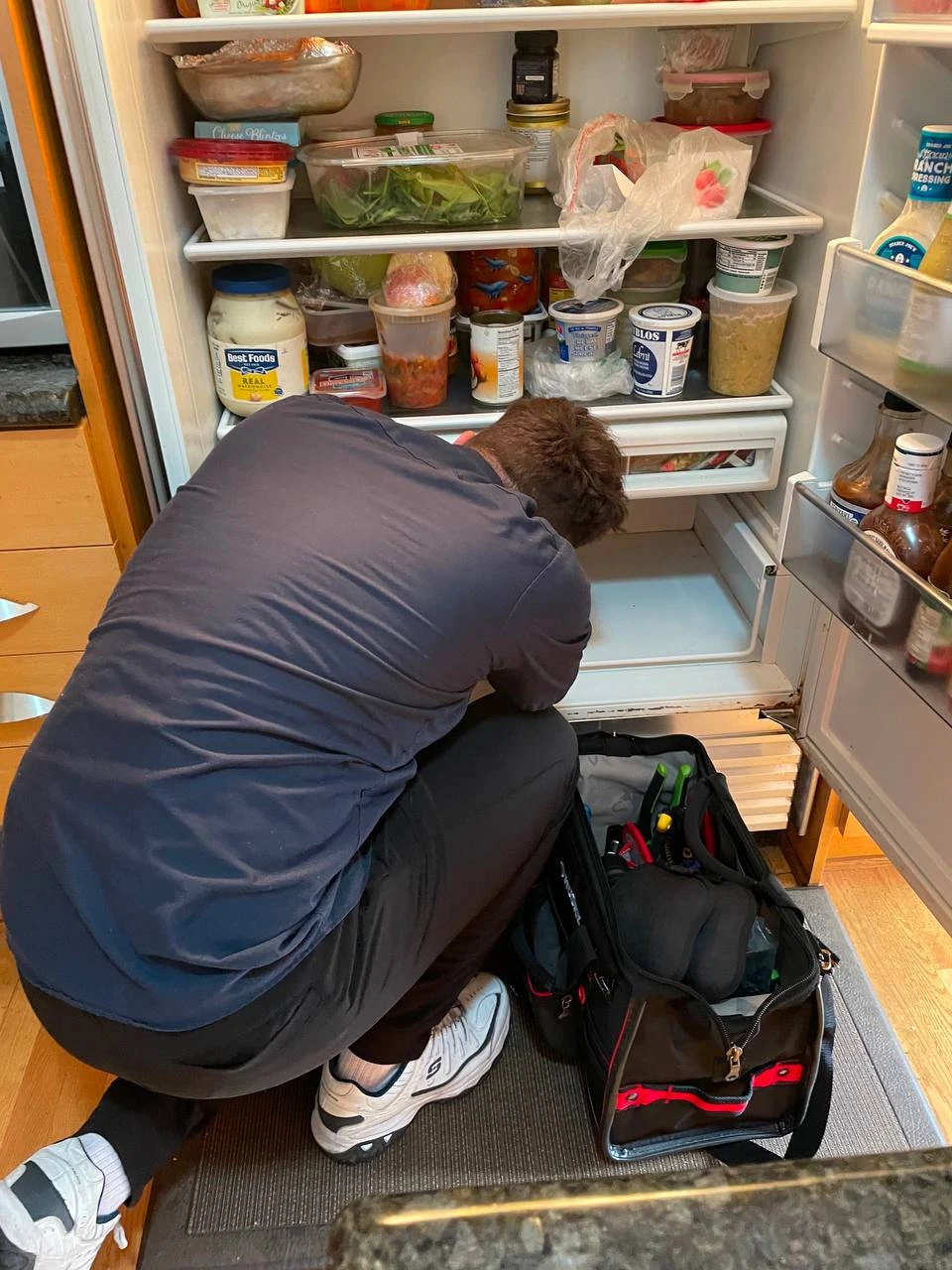
Diagnosing a refrigerator on site 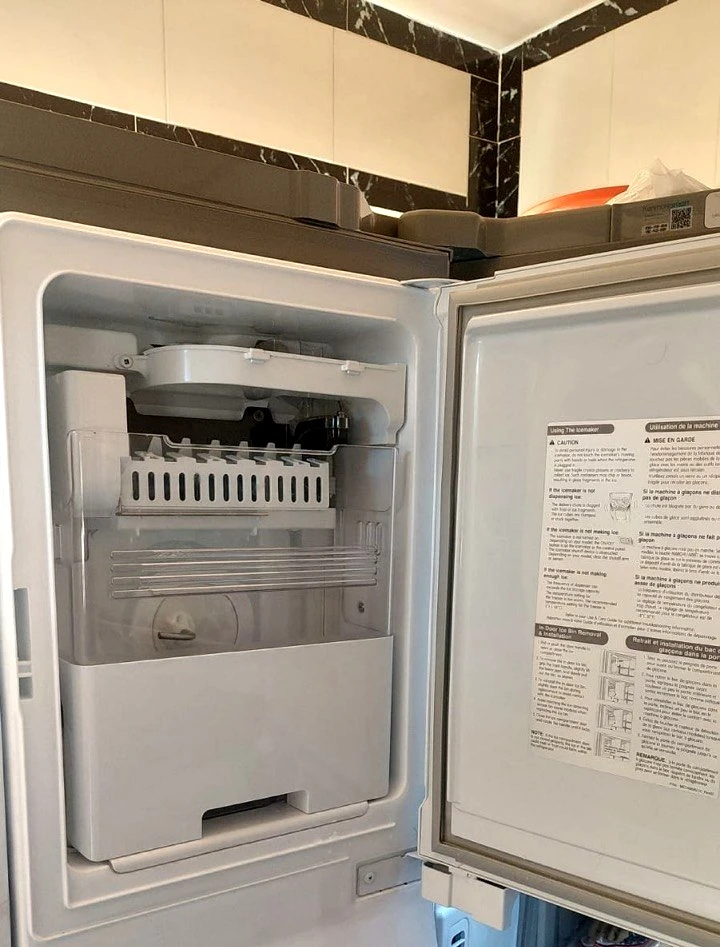
In-door ice maker on a French-door refrigerator 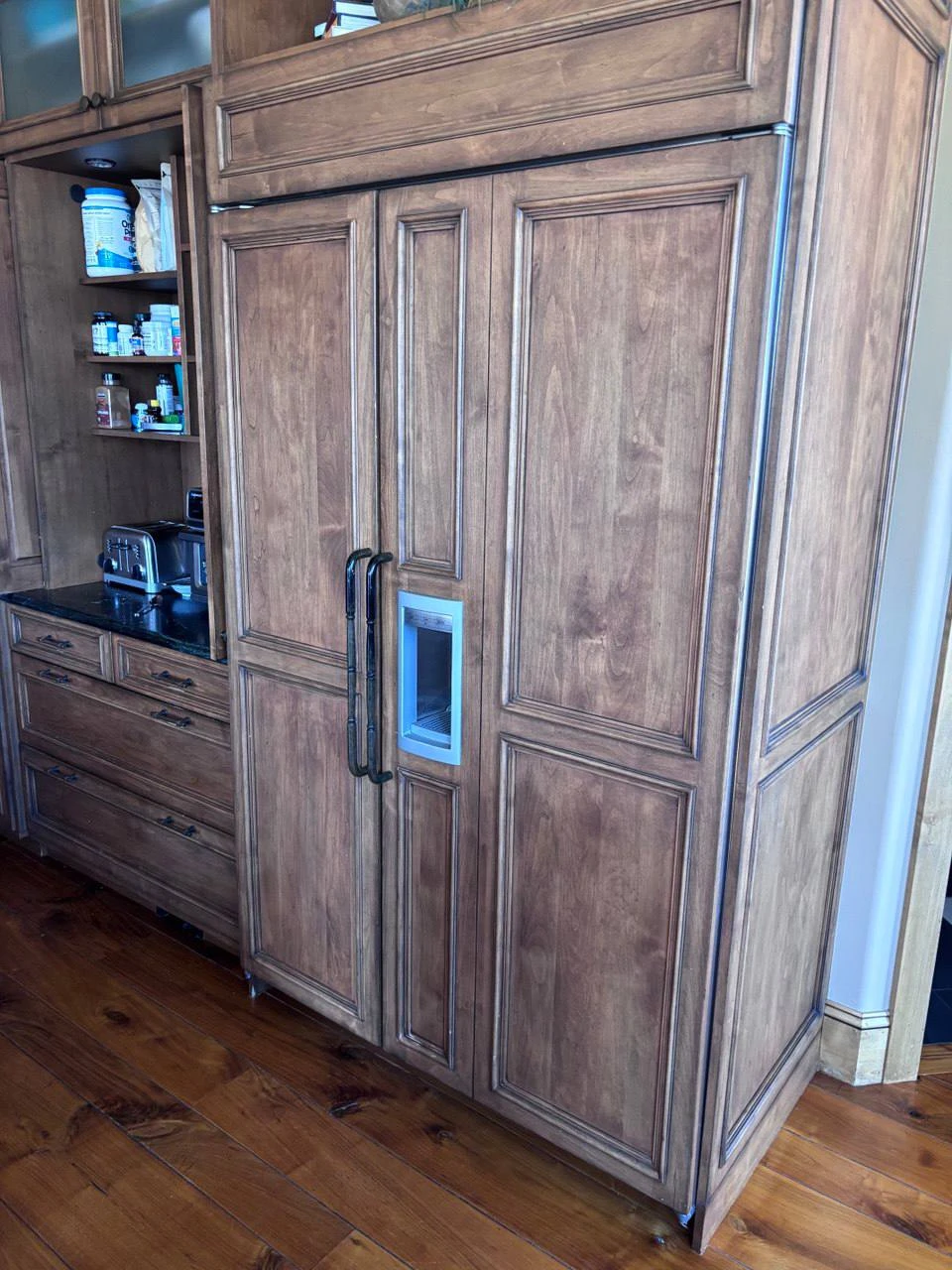
Panel-ready Sub-Zero side-by-side behind custom wood panels
Recognize the Problem?
Book Refrigerator Repair in Louisville
Tell us what's happening — we'll call you back to confirm a time.
(720) 285-3573Louisville Homes
Rebuilt Kitchens, Older Streets and Thin Air
A few real things about this town shape how refrigerators here are installed, how they age and where your technician looks first.
Brand-New Fridges in Rebuilt Homes
The December 2021 Marshall Fire destroyed or damaged a large number of homes here, and many of those houses have since been rebuilt with brand-new appliances. A new refrigerator can still fail, and early trouble tends to come from installation rather than wear: a water line pinched when the unit was pushed into place, a loose fitting behind the cabinet or controls left on a showroom setting. Newer models also lean heavily on sensors and control boards, so error codes and odd behavior call for real testing rather than guesswork. If your fridge is young, look over the manufacturer's warranty paperwork before booking, and we will tell you honestly if the fault belongs to them.
Older Homes Around Historic Downtown Louisville
The established streets near Steinbaugh Pavilion hold older homes whose kitchens were often updated in stages, which can mean a refrigerator squeezed into an opening built for a smaller appliance. A fridge with little breathing room around it runs hotter and longer, and a door gasket that has hardened over the years lets warm air seep in a little at a time. Older units also carry years of dust on the condenser coils, which quietly pushes the compressor harder each season. We work carefully in tight spaces, protect your floors when a unit has to come out, and check the basics that age wears down first.
Dry Front Range Air at 5,401 Feet
At 5,401 feet, the air here runs dry, and dry air carries dust that settles on front grilles and condenser coils. With more than thirty miles of trails in and around town, plenty of households track in dirt and pet hair that finds its way under the fridge too. A coated condenser makes the refrigerator run longer to shed the same heat, which shows up as a warm fresh-food side on a hot summer afternoon. Elevation itself does little to a sealed refrigeration system, so when cooling slips, airflow and parts are the first suspects.
Error Codes
Refrigerator Error Codes by Brand
Official codes from each manufacturer, with what to try first, are on our refrigerator repair page. Common ones at a glance:
Samsung
21E · 22E · 88 and more
LG
FF · IF · dH and more
Bosch
E02 · E03 and more
GE · Monogram
FF · dE · CC and more
Sub-Zero
EC50 · EC40 · EE and more
Whirlpool · KitchenAid
Flashing · PO · Temperature and more
Frigidaire
H · DI · PF and more
Repair or Replace?
Fix the Fridge or Shop for a New One?
The typical lifespan listed beside this section is drawn from a National Association of Home Builders study. It gives you a reasonable starting point, though it reflects an average refrigerator and not necessarily yours. A sound unit with a failed fan motor, defrost heater, inlet valve or gasket is almost always worth repairing, because those parts are modest compared with the cost of a new refrigerator and the hassle of installing one. The math changes when an older, basic model needs sealed-system work or when several major parts are failing at once. Your technician gives you a firm quote and an honest read on the rest of the machine so you can weigh it with real numbers in hand.
Several other things can tip the decision one way or the other. Built-in and panel-ready refrigerators tend to be worth repairing, because a replacement can mean new custom panels, cabinet work and hunting for a model that fits the exact opening. On the other side, a very old refrigerator may use noticeably more energy than a current model, and parts for discontinued units can become hard to find. If your fridge is new, as in many rebuilt homes, the manufacturer's warranty may cover the repair, and we will point that out before you spend anything.
Typical refrigerator lifespan
~13 yrs
Source: NAHB study. Real life varies with brand, use and maintenance.
Built-In & Luxury
Refrigerators Dressed to Match the Cabinets
Many higher-end kitchens have built-in and panel-ready refrigerators from Sub-Zero, Thermador, Viking, Monogram, JennAir and Miele, often dressed in custom wood panels that blend right into the cabinetry. Those panels are part of your kitchen's finish, not just the appliance, so we treat them that way. Your technician protects surrounding surfaces, removes and rehangs panels and trim carefully when access requires it, and slides a built-in out of its opening only when the repair truly calls for it. The goal is a kitchen that looks exactly as it did before we arrived, with a refrigerator that runs better.
A built-in sits tight inside its cabinet with no open space along the sides, so it pulls in and exhausts air through a grille at the front or top. When that grille or the condenser behind it collects dust, temperatures creep up and the compressor works longer than it should, sometimes long before any other symptom appears. We clean and check that airflow path on every built-in visit, along with fans, defrost components and door hinges that carry heavy custom panels. We repair with genuine OEM parts, which counts on premium units where the fit, the sealing and the control software are specific to the model.
Before You Call
Before You Pick Up the Phone
- 1Power at the plug and the panelA tripped breaker, a GFCI outlet that has popped or a cord bumped loose while mopping can make a working refrigerator seem dead, so confirm power before anything else.
- 2The setting on the dial or displayControls get nudged while loading groceries or wiping shelves, and a small shift can warm the fresh-food side or start freezing the produce. Some models also have a showroom or demo mode that lights the display without cooling.
- 3Space in front of the inside ventsCold air flows from the freezer into the fresh-food section through vents, and a tall jug or an overstuffed shelf can block that path and leave one zone warm.
- 4How each door closesA jar sticking out of a door bin, a drawer that isn't pushed fully shut or a tacky gasket can keep a door ajar just enough to let warm, humid air in and build up frost.
- 5Dust on the grille you can reachUnplug the refrigerator, then run a vacuum brush over the front grille or any coils you can easily reach so the system can release heat; skip anything that needs tools or moving the unit.
Brands
Refrigerator Brands Your Technician Knows
We service everyday names like Whirlpool, GE, Frigidaire, Maytag, LG and Samsung alongside KitchenAid, Bosch and premium built-in lines. Tap your brand below to find notes for your model.
What to Expect
What the Visit Looks Like in Your Kitchen
Your technician comes during the window you picked, takes temperature readings in both compartments, listens to the fans and compressor, and tests the parts tied to the symptom you're seeing. You hear what failed and why in plain language, get a firm quote, and no work starts until you say yes.
- Diagnostic visit
- $85Credited toward the repair if you go ahead
- Your price
- Firm quoteApproved by you before any work
- Warranty
- 90 daysParts and labor
- Parts
- Genuine OEMMatched to your model number
Google Reviews
What Refrigerator Repair Customers Say
5.0Every review on Google is five stars.
“Nick is professional, highly-skilled, and did a great job troubleshooting and fixing our refrigerator. Our Whirlpool refrigerator was dispensing water randomly. Nick figured out the root cause, ordered a part, and then fixed it the day the part arrived. With such a potentially deleterious issue, Nick took care of it quickly, and effectively. We are grateful. I will certainly call upon his expertise again.”
Brian R.August 2026 · Google “We had an amazing experience with the PointLine appliance when our refrigerator stopped working. Very professional, honest and thorough in diagnosing and fixing the issue. Fair, transparent and competitive pricing. I will definitely call them again for any future appliance issues”
Simon V.October 2026 · Google “Nick was excellent. He was able to come out the same day as I discovered that my 21 year old refrigerator had been leaking for weeks or months. He was able to diagnose the problem quickly, ordered the part immediately, and was available within a couple of days to install the new part and finish the repair work. He was on time for both appointments, and called in advance. It’s hard to find people like this these days, I will highly recommend him and use him again if I have additional appliance failures.”
Noreen B.June 2026 · Google
Membership
PointLine Care Club
One service call is $85. For $99 a year, every service call is free.
- Free service calls all year — no $85 fee
- 1 free maintenance visit a year
- 10% off labor on every repair
$99/ year
One household · renews yearly · cancel anytime before renewal
Property manager or landlord? See our Property Care Club →
Service Area
Louisville ZIP Codes We Serve
Refrigerator Repair at homes, condos and rentals in every part of Louisville.
- 80027
Including Historic Downtown Louisville.
FAQ
Fridge Questions From Louisville Kitchens
Refrigerator questions from Louisville homeowners.
We live off CO-42 in 80027. Is that within your refrigerator service area?
Yes, we serve all of ZIP code 80027, from Historic Downtown Louisville to the neighborhoods along US-36, CO-42 and the Northwest Parkway. We also serve nearby Lafayette, Superior, Broomfield, Erie, Boulder and Northglenn from our office in Superior.
Our house was rebuilt after the Marshall Fire, and the new fridge is already acting up. Is that normal?
It is not normal, but it does happen, and early problems on a new refrigerator often trace to installation or a single defective part. Before you book, see whether the manufacturer's warranty still covers the problem. If it does not, or you want a clear diagnosis first, we test the unit and tell you honestly where the fault lies.
Our older home near Steinbaugh Pavilion has the fridge jammed into a tight alcove. Is that a problem?
It can be, because a refrigerator with no breathing room struggles to shed heat and runs longer than it should. Your technician checks the clearance your model's manual calls for, cleans the condenser and looks for wear that heat speeds up, such as tired fan motors. If the fridge has to come out for the repair, we protect your floors and trim.
Does living at 5,401 feet affect how my refrigerator works?
Not much, since a refrigerator's sealed system does not depend on outside air pressure the way a gas burner does. The bigger local factor is the dry, dusty air, which coats condenser coils and front grilles. Keeping those clean is the easiest way to help a fridge here run cooler and quieter.
I rent out a condo in town. Can I schedule a fridge repair without being there?
Yes, a landlord or property manager can schedule and approve the work, and a tenant can simply let us in. We share the diagnosis and firm quote with whoever you designate before any repair begins. That way your tenant gets cold food back and you keep control of the cost.
The fridge reads a few degrees above 40°F, but nothing has spoiled yet. Can it wait?
Book soon rather than waiting, because a slow climb usually means a fan, defrost part or dirty condenser that will keep getting worse. In the meantime, keep the doors closed, track temperatures with an appliance thermometer and move perishables to a cooler with ice if the reading keeps rising. Food that has been above 40°F for more than 2 hours should be thrown away.
More in Louisville
Other Repairs We Handle in Louisville
- Freezer Repair in Louisville
- Ice Maker Repair in Louisville
- Wine Cooler Repair in Louisville
- Washer Repair in Louisville
- Dryer Repair in Louisville
- Dryer Vent Cleaning in Louisville
- Dishwasher Repair in Louisville
- Oven Repair in Louisville
- Wall Oven Repair in Louisville
- Range & Stove Repair in Louisville
- Cooktop Repair in Louisville
- Microwave Repair in Louisville
- Range Hood Repair in Louisville
- Garbage Disposal Repair in Louisville
- Commercial Appliance Repair in Louisville
Is your fridge losing its grip on the cold?
Book online or call or text (720) 285-3573, and your $85 diagnostic is credited toward the repair you approve; PointLine Care Club members pay $99 a year for free service calls, a yearly maintenance visit and 10% off labor.