Repair Case • Refrigerator
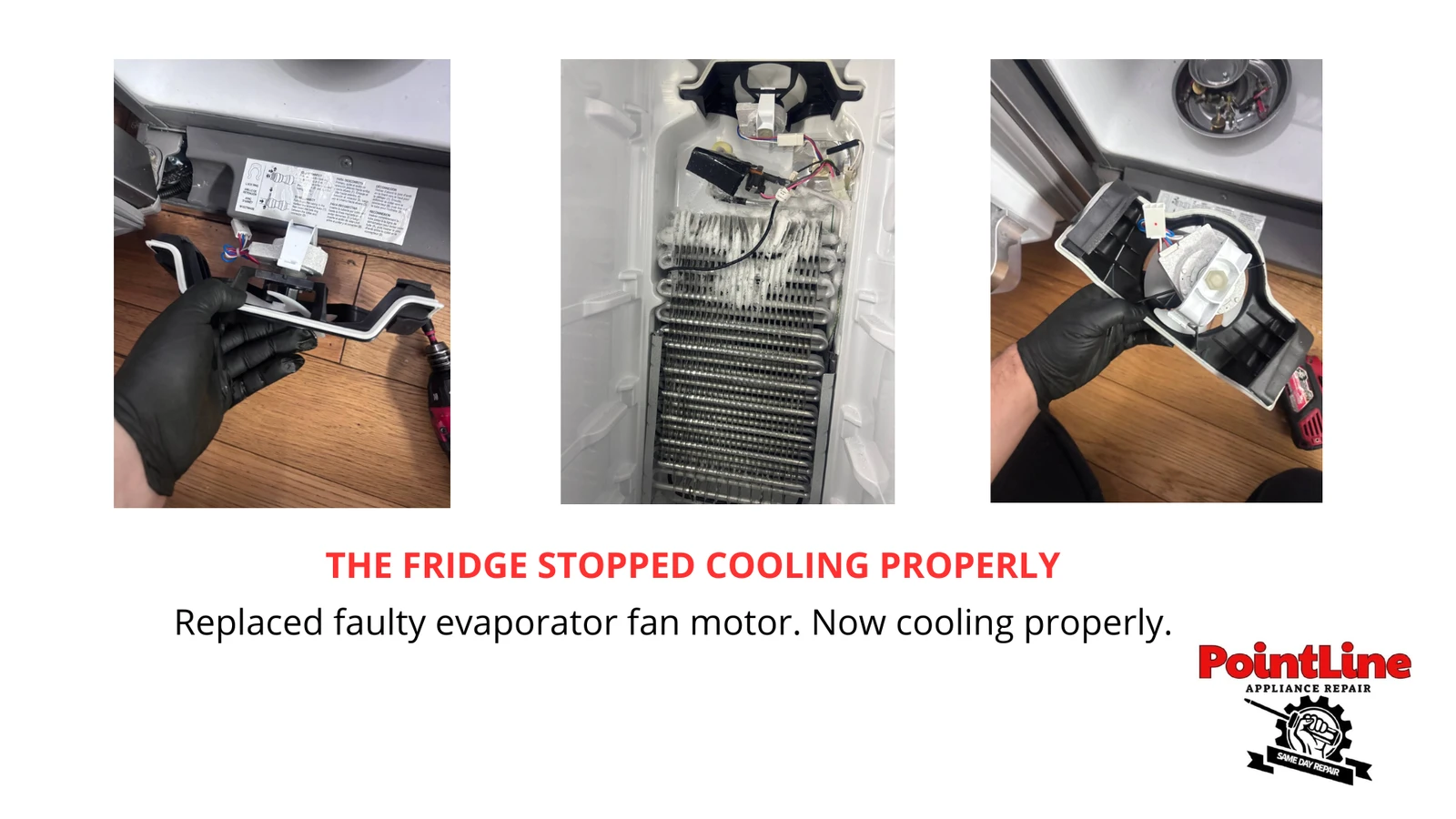
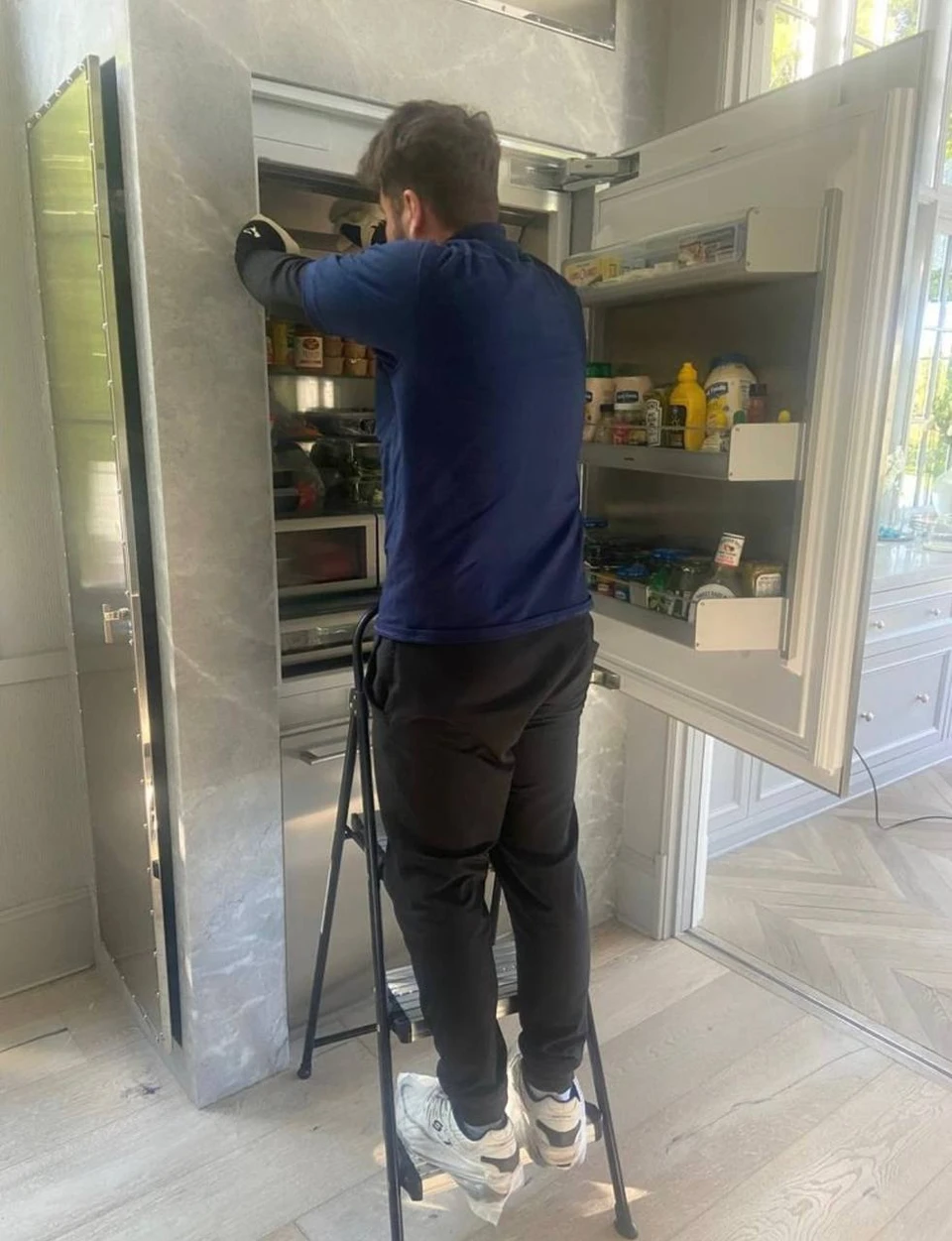
Fridge stopped cooling properly
- Problem
- The fridge stopped cooling properly.
- Repair
- Replaced the faulty evaporator fan motor.
- Result
- Now cooling properly.
Denver, Colorado
Warm shelves, frost-choked freezers and empty ice bins, traced to the real fault and priced firmly before any work begins.
What's your fridge doing?
5.0— every review on Google
Read more reviews on Google“We were vey happy with PointLine’s repair service. Nick was able to come out on short notice and diagnosed the issue with our fridge, ordered the right part, and completed the repair - all within 24 hours. Highly recommend. Professional, efficient, and cost effective.”
“Nick is professional, highly-skilled, and did a great job troubleshooting and fixing our refrigerator. Our Whirlpool refrigerator was dispensing water randomly. Nick figured out the root cause, ordered a part, and then fixed it the day the part arrived. With such a potentially deleterious issue, Nick took care of it quickly, and effectively. We are grateful. I will certainly call upon his expertise again.”
“Great fast work, very fair pricing. Will be calling him first for any future repairs!”
Quick answer
PointLine Appliance Repair fixes refrigerators across Denver, from Capitol Hill condos to newer homes in Central Park. We handle warm fresh-food sections, frosted freezers, leaks, noisy fans and ice makers that quit. Same-day service is often available. The $85 diagnostic is credited toward the repair, and work carries a 90-day parts and labor warranty. Call or text (720) 285-3573 24/7.
Last updated
Refrigerator Repair • Denver
A refrigerator rarely fails with a bang. It shows up as a carton of eggs that feels cool instead of cold, a freezer drawer that scrapes against new ice, or a dispenser that coughs out half a glass and stops. We repair refrigerators in houses, condos, lofts and rental units across Denver. That runs from the older buildings of LoDo (Lower Downtown), the city's original settlement, to Lowry and the brand-new homes of Central Park. French-door, side-by-side, top-freezer, bottom-freezer, counter-depth and built-in models all come through our work.
PointLine is a small family business that works across Denver. The person who answers your call or text belongs to the same small company that sends your technician, with no national call center in between. Getting a refrigerator repair right matters because the appliance guards a week of groceries, maybe insulin or other medicine, and the leftovers that feed a busy household. A wrong guess means parts swapped for nothing and food lost in the meantime. So we test before we quote, give you a firm price before any work, install genuine OEM parts and back the job with a 90-day parts and labor warranty.
Right Now
These steps follow USDA food safety guidance and buy your food the most time possible before the repair.
40°F
Refrigerator at or below
0°F
Freezer at or below
~4 hrs
A closed refrigerator keeps food cold
~48 hrs
A full, closed freezer holds (half full ~24)
Source: USDA Food Safety and Inspection Service — Keep Your Food Safe During Emergencies.
Common Problems
These rows describe how refrigerators are generally built and how they tend to fail; your technician confirms the actual cause with measurements and tests in your kitchen before naming a part or a price.
Ice Maker & Water Filter
Ice depends on a steady trickle of water and a freezer cold enough to freeze it quickly, so a slow bin usually points to one weak link between the wall valve and the ice tray.
Water leaves a shutoff valve behind or below the refrigerator, travels through a supply line and the filter, passes an electric inlet valve and climbs a fill tube into the ice maker. A valve left partly closed after a remodel, a line kinked when the fridge was pushed back, or a filter packed with sediment can each cut the flow to a trickle. A fill tube can freeze solid, and a failing inlet valve may open only partway or not at all. Even with plenty of water, a freezer running too warm will produce small, hollow cubes or none at all.
The owner's manual lists the replacement interval for your exact filter, and that is the schedule to follow. Many brands suggest a change about every six months, but cartridges differ in size and design. An overdue filter slows the dispenser first and the ice maker soon after. Use the genuine filter for your model, because a poorly fitting cartridge can leak at the housing or bypass filtration entirely.
Dissolved minerals reach every refrigerator, and on scale-prone water they gradually coat the inlet valve's small screen and the seat where it opens and closes. The flow narrows slowly, so ice production can taper off over months before anyone notices. Some manufacturers also recommend periodic cleaning of ice maker parts, and the manual explains how. When scale has fouled the valve itself, replacing it is usually the lasting answer.
You can safely confirm that the ice maker's switch or bail arm is on, the shutoff valve is fully open, the line behind the fridge has no sharp bends and the filter is within its interval. Leave the rest to us: inlet valve testing, thawing a frozen fill tube, and diagnosing the ice maker module or the freezer temperature. Those jobs involve electrical tests and panels inside the freezer. If ice is still slow after your checks, book a visit before the bin runs dry.
From Our Own Jobs
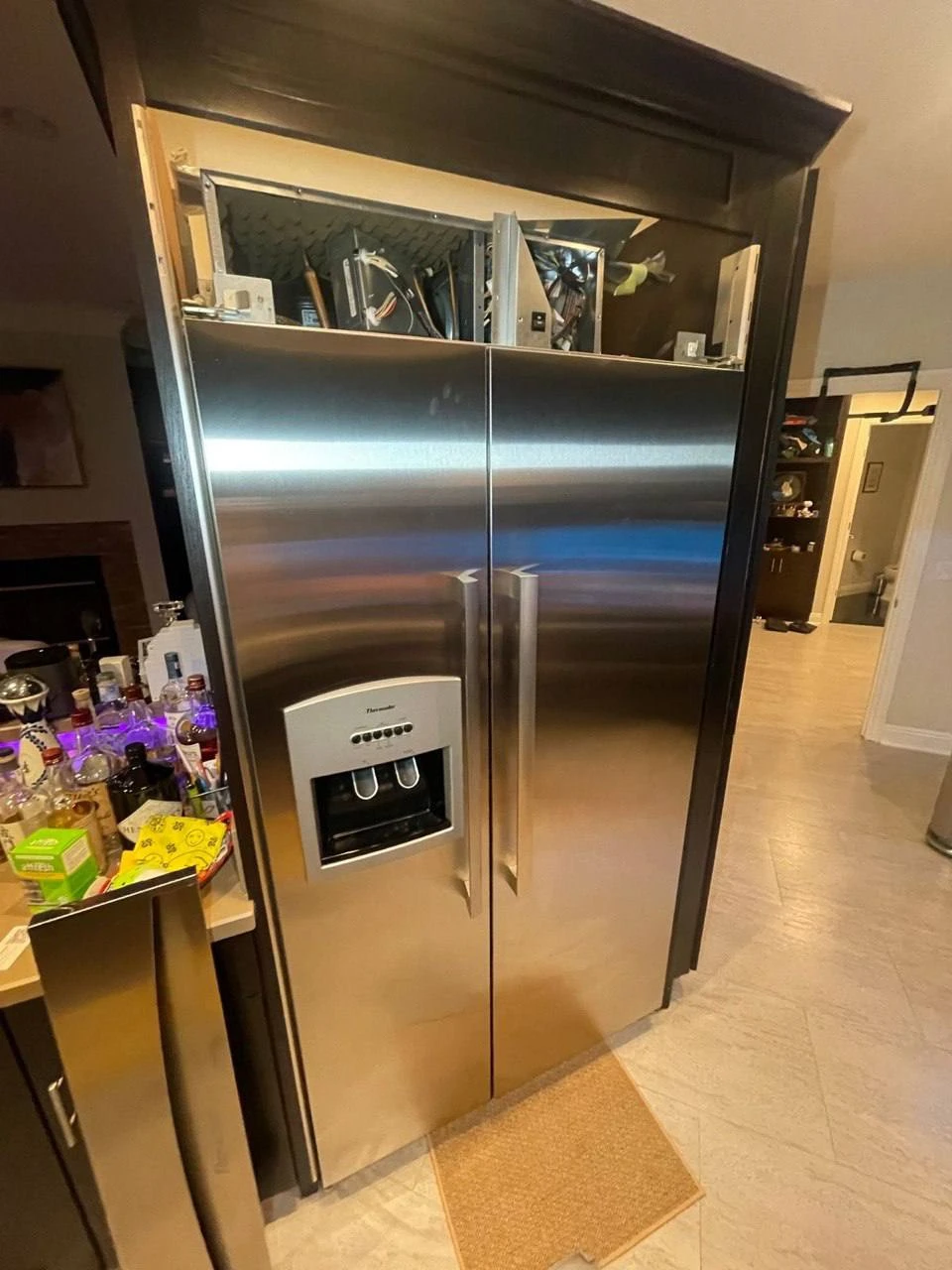
Real photos from our own service calls around the Denver Metro Area — not stock images.
Repair Case • Refrigerator
Recognize the Problem?
Book Refrigerator Repair in Denver
Tell us what's happening — we'll call you back to confirm a time.
(720) 285-3573Denver Homes
Three things about this city shape how a refrigerator gets installed, how it wears and where your technician looks first.
Denver's neighborhoods range from 19th-century homes near downtown to brand-new construction in Central Park and Green Valley Ranch. In Washington Park, most houses are brick from roughly 1900 to 1940, and many have since been expanded or replaced. Older kitchens were laid out long before today's deep refrigerators, so a modern unit can end up wedged into an opening that leaves little room for air to move around the condenser. Newer homes are more likely to have the original refrigerator with ice and water features, which bring their own valves, lines and filters to keep up with.
Denver Water draws on mountain snowmelt, and the utility describes its water as somewhat soft in the northern system and moderately hard in the southern system, with a tendency to form scale. In a refrigerator, minerals settle where water starts and stops: the inlet valve screen, the valve seat and the dispenser path. Most refrigerator filters are designed for taste, odor and sediment rather than for removing hardness minerals. Slow, gradual buildup is normal, and it is one reason an ice maker can taper off over a long stretch rather than failing overnight.
At 5,280 feet, with the foothills off to the west, the air here generally runs dry, and dry air keeps fine dust drifting through the house. That dust collects on the front grille and condenser coils, and a dusty condenser forces the compressor to run longer to shed heat. Summer kitchens add more load, and so do fridges in garages, basements and rentals where coil cleaning tends to fall between owner and tenant. A fridge that ran fine all winter can start struggling once warm weather arrives.
Error Codes
Official codes from each manufacturer, with what to try first, are on our refrigerator repair page. Common ones at a glance:
Samsung
21E · 22E · 88 and more
LG
FF · IF · dH and more
Bosch
E02 · E03 and more
GE · Monogram
FF · dE · CC and more
Sub-Zero
EC50 · EC40 · EE and more
Whirlpool · KitchenAid
Flashing · PO · Temperature and more
Frigidaire
H · DI · PF and more
Repair or Replace?
The typical lifespan shown beside this section comes from a National Association of Home Builders study. Treat it as a reference point, since it reflects an average refrigerator rather than the one in your kitchen. Age matters most when it combines with an expensive failure. A fan motor, defrost heater, inlet valve, gasket or sensor is usually well worth replacing on a sound refrigerator at almost any age. A failed compressor or refrigerant leak on an older basic model is the kind of repair that can push the math toward a new unit. Your technician gives you a firm quote first, so you can compare it with the price of a replacement before anything is ordered.
A few other factors can tip the decision. Built-in and panel-ready refrigerators usually favor repair, because replacing one can mean new custom panels, cabinet changes and a search for a model that fits the opening. Energy use counts too: a refrigerator that runs nonstop costs more to operate. A newer model may use less power than an aging one that has been struggling. Parts availability matters as well, and on some older models certain OEM parts are discontinued. We tell you plainly if that is the case before you spend anything beyond the diagnostic.
Typical refrigerator lifespan
~13 yrs
Source: NAHB study. Real life varies with brand, use and maintenance.
Built-In & Luxury
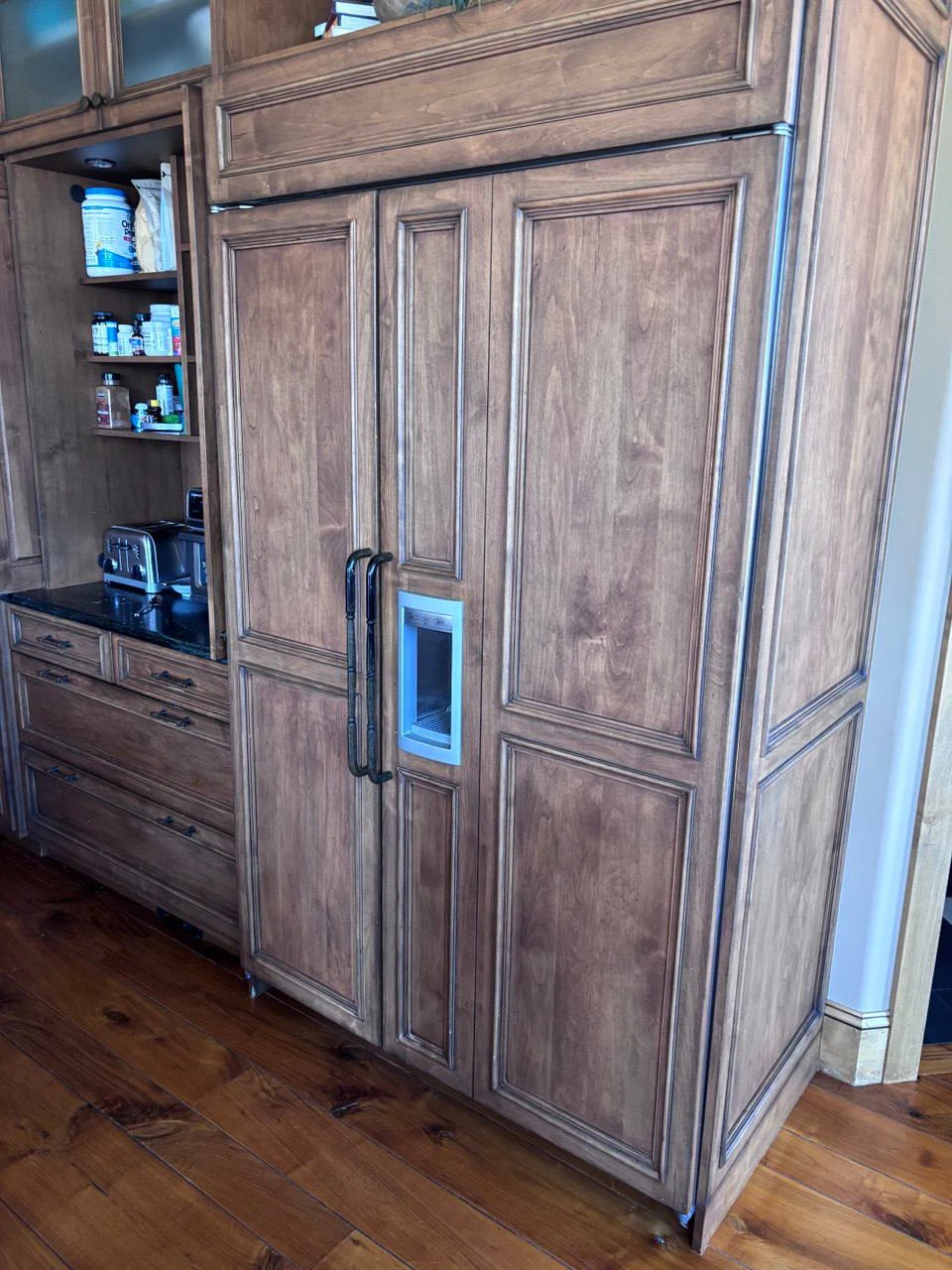
Higher-end kitchens often carry built-in and panel-ready refrigerators from Sub-Zero, Thermador, Viking, Monogram, JennAir and Miele, many wearing wood panels that match the cabinets. We service these units in kitchens from Cherry Creek to Hilltop and Country Club, and in remodeled kitchens anywhere in the city. The work calls for patience. Panels come off and go back on with their original hardware, finished floors get protected before a unit slides forward, and adjoining cabinets and trim are handled with care. Your technician explains in advance if a repair requires moving the unit out of its opening.
A built-in has no open space along its sides, so it pulls in and exhausts air through a grille at the front or top. When that grille or the condenser behind it clogs with dust, the compressor runs longer and temperatures creep up without any obvious cause. Many built-ins use separate cooling systems for the fresh-food and freezer sections, along with dedicated controls and sensors that need model-specific testing. We use genuine OEM parts on these refrigerators, because generic substitutes can fit poorly, read temperatures wrong or affect the original design.
Before You Call
Brands
Samsung, LG, Whirlpool, GE, Frigidaire, Maytag, KitchenAid and Bosch share our schedule with Sub-Zero, Thermador, Viking, Monogram, JennAir and Miele. Select your brand below for notes on its common faults and model details.
What to Expect
The visit begins with a $85 diagnostic that is credited toward the repair: your technician reads temperatures in both sections, listens to the fans and compressor, and tests the parts tied to your symptom. You then get a firm quote before any work starts, and if you approve it, the repair is often finished with genuine OEM parts on the same visit when the part is on hand.
Membership
One service call is $85. For $99 a year, every service call is free.
$99/ year
One household · renews yearly · cancel anytime before renewal
Property manager or landlord? See our Property Care Club →
Service Area
Refrigerator Repair at homes, condos and rentals in every part of Denver.
Including LoDo (Lower Downtown), Central Park, Lowry, Capitol Hill, Cherry Creek, Washington Park, Park Hill, Highland, Sloan Lake, University Park, Green Valley Ranch, Hampden, Bear Valley, Hilltop, Country Club.
FAQ
Refrigerator questions from Denver homeowners.
We cover every ZIP code in the city: 80202, 80203, 80204, 80205, 80206, 80207, 80209, 80210, 80211, 80216, 80218, 80219, 80220, 80222, 80223, 80224, 80230, 80231, 80236, 80237, 80238, 80239, 80246 and 80249. We also serve the ZIP codes the city shares with its neighbors: 80212, 80221, 80227, 80235 and 80247. Book online or call or text (720) 285-3573 and we will confirm your address.
Yes, we work on refrigerators in tight alcoves regularly, and most repairs happen without fully removing the unit. Your technician protects the floor and nearby cabinets before easing the fridge forward if needed. We will also point out whether the tight fit is choking condenser airflow, since that can shorten the life of the repair.
It can, though slowly. The water here tends to form scale, which gradually narrows the inlet valve screen and seat over months or years. If your filter is current and the shutoff is fully open but flow keeps dropping, the inlet valve is a likely suspect, and we test it before replacing anything.
No, refrigerators do not use a high-altitude setup the way some gas ranges and dryers do. What matters more at this elevation is the dry, dusty air, which coats grilles and condenser coils. Keeping the front grille clean helps the compressor run less.
Yes, an owner or property manager can book the visit and a tenant can meet your technician. We share the diagnosis and the firm quote with whoever you designate, and no work begins until it is approved. The $85 diagnostic is credited toward the repair either way.
No, call now. Perishables above 40°F for more than 2 hours should be thrown out, and a slowly warming fresh-food side often signals a defrost or fan problem that will get worse. Meanwhile, move perishables into an iced cooler and keep the doors closed.
More in Denver
Text or call (720) 285-3573 day or night, or pick a time online; your $85 diagnostic is applied to the repair you approve, and a 90-day parts and labor warranty stands behind the work.