Arvada, Colorado
Refrigerator Repair in Arvada, CO
Soft milk, a frost-caked freezer or a quiet ice bin: we find the failed part and quote the repair before any work begins.
What's your fridge doing?
- Firm Quote FirstApproved by you before any work
- 90-Day WarrantyParts & labor
- Open 24/7Same-day service often available
- Local & Family-OwnedBased in Superior
Refrigerator Repair • Arvada
Steady Cold for Arvada Kitchens Old and New
A refrigerator is the only appliance in the house that is expected to work every minute of every day, and it rarely complains until something is already wrong. The first clue might be yogurt that feels a little too soft, a freezer drawer glazed with frost or a dispenser that coughs out half a glass. By then, the groceries are already on the clock, and a wrong guess at the cause can mean a second visit and a second bill. That is why we treat a fridge repair as a diagnosis first and a parts order second.
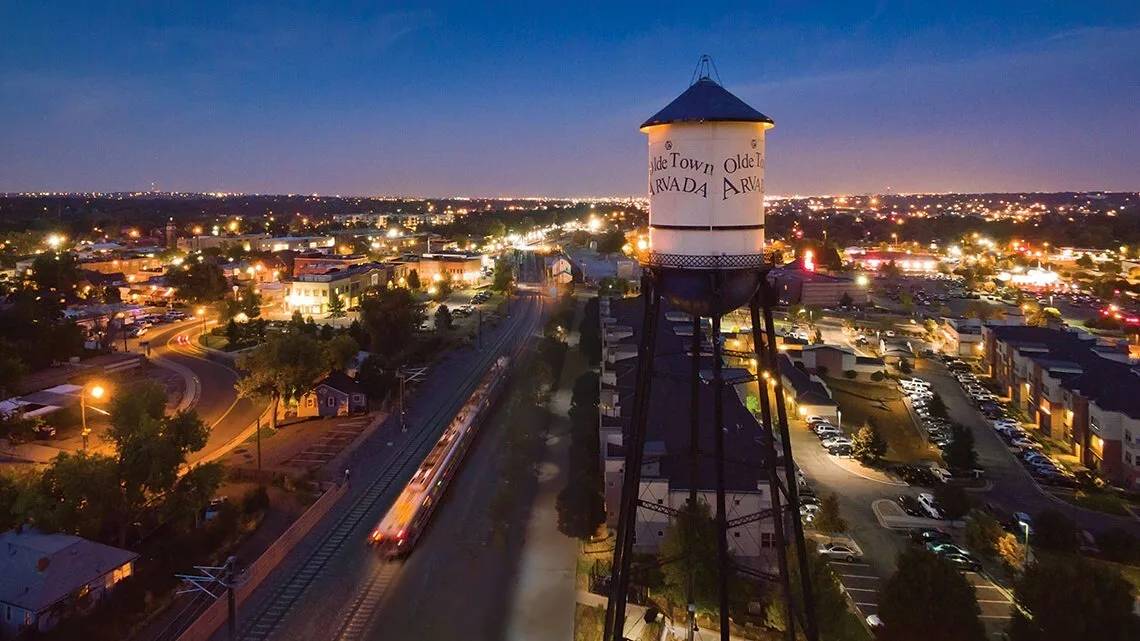
PointLine is a small, family-owned company working out of a single office at 2600 S Rock Creek Pkwy in neighboring Superior, and we fix refrigerators in houses, condos and rentals all the way from Olde Town Arvada to the postwar neighborhoods north and west of it. Your technician tests the actual fault in your kitchen, gives you a firm quote and only then starts work, using genuine OEM parts. A well-made refrigerator with one failed fan or sensor usually has years of service left in it. Getting that one part right is what keeps it there.
Right Now
Holding the Cold Until Your Technician Arrives
These steps follow USDA food safety guidance and help you keep as much as possible from the shelves.
40°F
Refrigerator at or below
0°F
Freezer at or below
~4 hrs
A closed refrigerator keeps food cold
~48 hrs
A full, closed freezer holds (half full ~24)
- 1Hold the doors shutWith the door kept shut, a refrigerator will hold food at a safe cold temperature for roughly 4 hours. A full freezer holds its cold for roughly 48 hours and a half-full one for roughly 24, so every time the door opens, that window gets shorter.
- 2Trust a thermometer, not your handSet an appliance thermometer inside each compartment. The refrigerator should read 40°F or below and the freezer 0°F or below, and the reading tells you how urgent things really are.
- 3Bring out the coolers for a long waitIf the repair might take longer than closed doors can keep things cold, pack milk, meat, leftovers and other perishables into coolers with ice. Group items you will need first near the top so you open the cooler less.
- 4Sort by temperature, never by tasteFood that is still at 40°F or colder, and frozen items that still contain ice crystals, can be refrozen or used. Throw out perishables that have sat above 40°F for more than 2 hours, and never rely on a taste test to decide; if you're unsure, toss it.
Source: USDA Food Safety and Inspection Service — Keep Your Food Safe During Emergencies.
Common Problems
From a Sweating Milk Jug to a Blinking Display: What It Means
Each row reflects how refrigerators are generally engineered; your technician measures and tests in your kitchen before any part is named or priced.
Fresh-food section warm while the freezer stays cold
- Likely causes
- Cold air for the fresh-food side is blown in from the freezer, so an evaporator coil choked with frost after a defrost heater, timer, sensor or control failure can cut off the supply. A stalled evaporator fan has the same effect.
- What we check
- We remove the freezer panel to see the coil, test the defrost heater and sensor for continuity and confirm the fan spins freely.
- Typical fix
- Once the failed defrost part or fan motor is replaced and the ice is completely cleared from the coil, airflow usually returns to normal.
Both compartments warm and the compressor never rests
- Likely causes
- A condenser coil blanketed in dust or a condenser fan that has stopped leaves the system no way to dump heat. A worn start relay may also make the compressor strain.
- What we check
- We check coil condition, condenser fan operation, compressor current draw and start components, and on many units we can test for a sealed-system problem.
- Typical fix
- Most fixes are a coil cleaning, a new fan motor or a new relay; when the compressor or a refrigerant leak is the cause, we quote the sealed-system work so you can decide.
Frost thickening on freezer walls and packages
- Likely causes
- Humid room air slipping past a worn gasket or a door that does not quite close turns into frost. If the defrost system has stopped cycling, that frost keeps building.
- What we check
- We inspect the gaskets and hinges, check how the doors line up and test the defrost circuit.
- Typical fix
- A genuine OEM gasket, a hinge or door adjustment, or a defrost component repair, depending on what testing shows.
Water under the crispers or seeping onto the floor
- Likely causes
- A frozen or clogged defrost drain sends meltwater into the cabinet instead of the pan underneath. A loose fitting or cracked water line behind the fridge can leak too.
- What we check
- We trace the water back to where it starts, clear and test the drain, and inspect the supply line, filter housing and inlet valve.
- Typical fix
- We thaw and flush the drain and fix any defrost fault that froze it, or replace the leaking line or valve.
Ice maker slowing down or stopping
- Likely causes
- If your ice maker isn't getting enough water, the cause could be a valve that's only partly open, a kinked supply line, an aging filter or a frozen fill tube. A freezer running too warm, a failed inlet valve or a worn ice maker module can also stop production.
- What we check
- We measure the freezer temperature, check water flow at the valve and test the inlet valve and ice maker module.
- Typical fix
- Clearing the fill tube, replacing the valve or module, or correcting the freezer problem underneath the ice trouble.
Error code, blinking display or dead controls
- Likely causes
- A failed temperature sensor, a faulty control board or a lost signal between boards can trigger codes or leave the panel unresponsive. Sometimes the code is simply reporting a real fault elsewhere, such as a stopped fan.
- What we check
- We read the code against the manufacturer's service data, then test the sensors, wiring and board it points to.
- Typical fix
- Replacing the faulty sensor, wiring harness or control board, or repairing the underlying fault the code was reporting.
Ice Maker & Water Filter
Keeping the Ice Bin Full and the Water Clean
Before an ice maker can do its job, water has to travel from a valve in the wall to a small tray inside the freezer. Most slowdowns start at one stop along that route.
Reasons the Cubes Stop Coming
For an ice maker to work, it needs a steady supply of water and a freezer cold enough to freeze that water fast. A supply valve that was never fully opened, a line pinched when the fridge was pushed back, or a filter packed with sediment can all cut the water to a trickle. A fill tube that freezes solid blocks water completely, and a freezer drifting warm slows every batch. When those are ruled out, the inlet valve or the ice maker module itself is next in line.
When to Swap the Filter
Follow the replacement interval listed in your owner's manual for your specific filter. As a general rule, many manufacturers recommend swapping the filter roughly every six months, or earlier if the dispenser flows slowly or the water begins to taste off. An overdue filter restricts flow, which shows up as small or hollow cubes and a weak stream at the door. Use a filter made for your model, since a poor fit can bypass the cartridge or drip inside the housing.
Scale Settling in the Valve
Dissolved minerals are in tap water no matter where it comes from, and they tend to build up at the inlet valve, since that valve opens and closes many times each day. Over time, scale can coat the small screen and seat inside, slowing the fill or keeping the valve from closing tightly. A valve that will not seal can drip into the fill tube and freeze it shut, which looks like an ice maker failure. Replacing a scaled valve with a genuine part usually fixes both problems at once.
Your Checks and Where Ours Begin
Here's what you can safely check yourself: the ice maker switch or bail arm is turned on, the shutoff valve is open all the way, the water line behind the fridge isn't kinked, and the filter hasn't passed its replacement interval. If ice is still slow a day after those checks, or you see water where it should not be, it is time to book. Leave frozen fill tubes, inlet valves and anything behind the back panel to your technician. Chipping at ice with tools can crack the tube or damage wiring.
From Our Own Jobs
Real Refrigerator Repairs From Our Own Jobs
Real photos from our own service calls around the Denver Metro Area — not stock images.
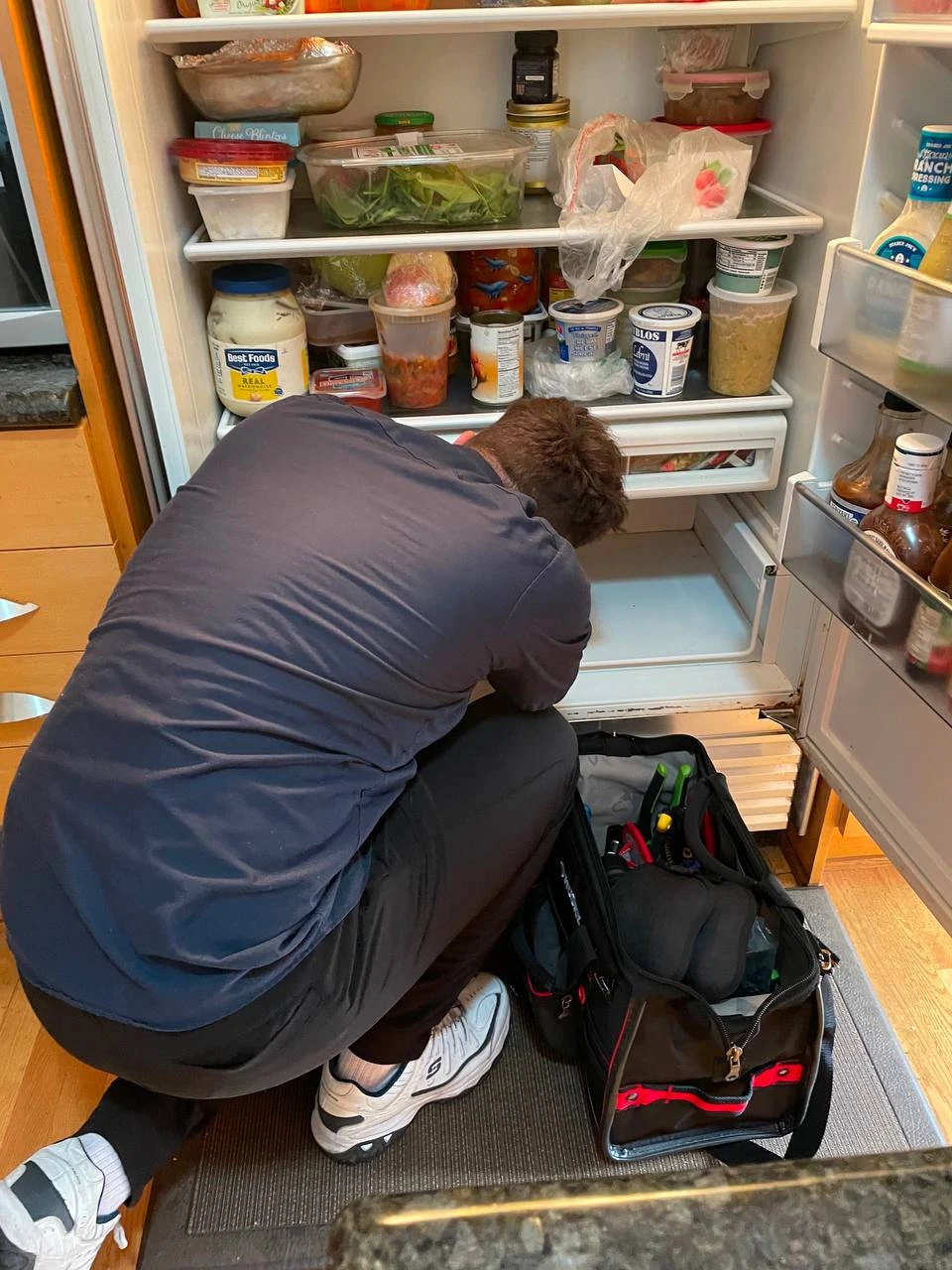
Diagnosing a refrigerator on site 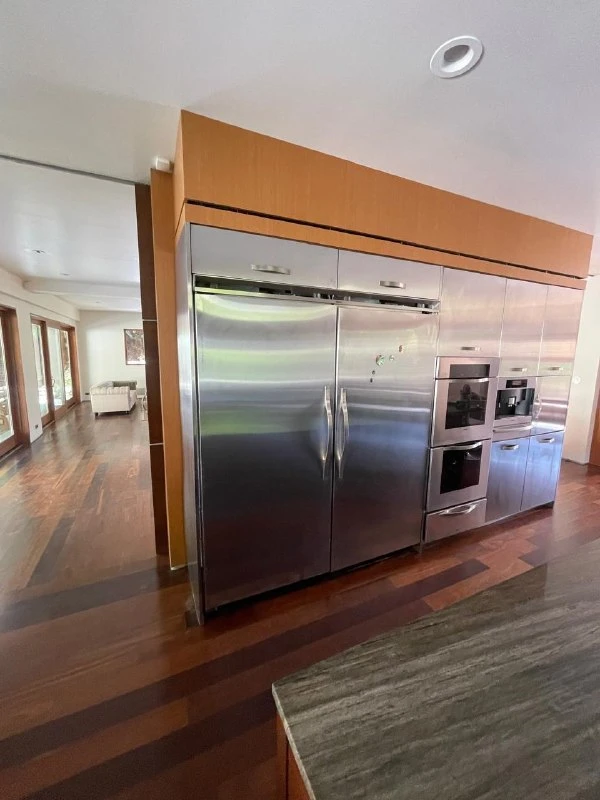
Built-in refrigerator and freezer columns 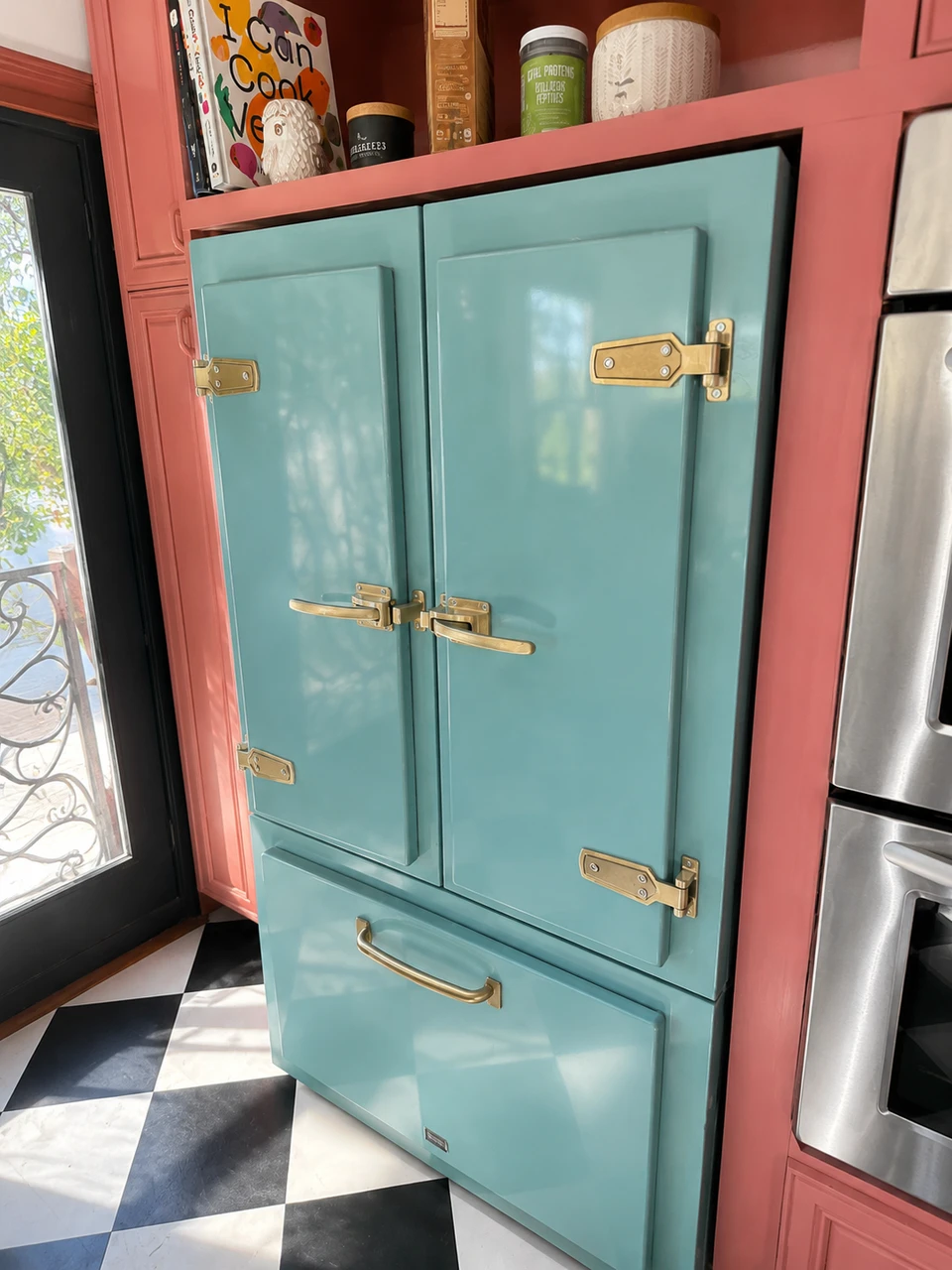
Retro-style French-door refrigerator
Recognize the Problem?
Book Refrigerator Repair in Arvada
Tell us what's happening — we'll call you back to confirm a time.
(720) 285-3573Arvada Homes
Postwar Kitchens, High Dry Air and Second Fridges
Three features of this city influence how refrigerators here get installed, how they wear over time and where your technician starts looking.
Kitchens Laid Out for Smaller Appliances
A big share of Arvada's growth came right after World War II, which means plenty of neighborhoods hold homes built between the 1950s and the 1970s, while Olde Town Arvada's historic district goes back even further. Those kitchens were planned around much smaller refrigerators, and a modern French-door or side-by-side model often ends up in an opening with almost no breathing room at the back or sides. A fridge that cannot shed heat makes its compressor run longer and its condenser fan work harder. Your technician checks clearance and airflow before blaming any single part.
Thin, Dusty Front Range Air
At roughly 5,300 to 5,500 feet, the air here is usually dry, and dry air keeps fine dust drifting through the house. That dust settles on the condenser coils and the grille below the doors, quietly insulating the very parts meant to release heat. A refrigerator that coasts through spring may start losing ground when summer warms the kitchen. Cleaning the coils is a simple step we can handle during a visit, and it often makes the repaired parts last longer.
Rentals, Basements and Garage Fridges
Homes here range from owner-occupied houses to condos and rentals, and a refrigerator in a rented unit can go years without anyone checking its gasket or coils. Second refrigerators in basements and garages face their own conditions, since room temperature in those spaces swings with the seasons. Many models are only designed for a certain room-temperature range, which the owner's manual lists, and a garage fridge outside that range can behave strangely in winter or summer. We look at where the unit lives before deciding whether a part has actually failed.
Error Codes
Refrigerator Error Codes by Brand
Official codes from each manufacturer, with what to try first, are on our refrigerator repair page. Common ones at a glance:
Samsung
21E · 22E · 88 and more
LG
FF · IF · dH and more
Bosch
E02 · E03 and more
GE · Monogram
FF · dE · CC and more
Sub-Zero
EC50 · EC40 · EE and more
Whirlpool · KitchenAid
Flashing · PO · Temperature and more
Frigidaire
H · DI · PF and more
Repair or Replace?
Keep It Running or Let It Go?
The typical lifespan listed beside this section comes from a National Association of Home Builders study, and it works as a reasonable starting point, but it reflects an average refrigerator, not necessarily yours. A sound unit with a failed fan motor, defrost heater, gasket, inlet valve or sensor is usually worth fixing, since those parts cost far less than a new appliance and the rest of the system may have plenty of life left. The math shifts when the refrigerator is near or past that typical age, when the repair would cost a large share of a comparable new model, or when a sealed-system failure hits a basic unit. Your firm quote gives you a real number to weigh instead of a guess.
A few other factors can also push the decision in either direction. Built-in and panel-ready refrigerators generally lean toward repair, since replacing one can involve new custom panels, cabinet modifications and a long hunt for a model that fits the opening. Parts availability matters too, since some older or discontinued models can be hard to source with genuine components. Newer refrigerators also tend to use less energy, which can make replacement more appealing for an aging unit that runs constantly. We lay out the options plainly and let you make the call.
Typical refrigerator lifespan
~13 yrs
Source: NAHB study. Real life varies with brand, use and maintenance.
Built-In & Luxury
Panel-Front and Built-In Refrigerators in Finished Kitchens
Upscale kitchens often feature built-in and panel-ready refrigerators from Sub-Zero, Thermador, Viking, Monogram, JennAir and Miele, many finished with custom panels that match the surrounding cabinetry. These units are anchored into their openings, and pulling one out carelessly can scratch a panel, chip a countertop edge or bend trim that is costly to replace. Your technician protects the floor and cabinet faces, works from the front service access wherever the design allows and handles panels and hinges with care. If a unit truly has to come out, we explain why first.
Because a built-in sits tight in its cabinet, it draws in and pushes out air through a grille at the front or top rather than through space at the sides. Dust or a blocked grille can raise temperatures slowly enough that the problem looks like a failing part, so we check airflow before anything else. When a part does need replacing, we use genuine OEM components made for that model, since premium refrigerators rely on precise sensors, boards and sealed systems. The goal is a repair that keeps the unit performing the way it was designed to.
Before You Call
Simple Checks You Can Do at Home
- 1Confirm the fridge has powerA tripped breaker, a GFCI outlet that has popped, or a plug knocked loose while mopping can make a perfectly good refrigerator seem dead, and whether the interior lights come on is a quick first hint.
- 2Look at the temperature settingA dial or touchpad bumped while loading groceries can warm the fresh-food side or start freezing produce, so reset it and give the unit several hours to settle.
- 3Clear the vents inside the cabinetVents carry cold air from the freezer into the fresh-food section, so a tall jug or an overstuffed shelf blocking them can leave one zone too warm.
- 4Make sure every door sealsA drawer left open a crack, a jar sticking out of a door bin or a sticky gasket can let in warm, humid air that turns to frost and makes the compressor run longer.
- 5Vacuum the grille below the doorsWith the refrigerator unplugged, run a brush attachment over the front grille or any coils you can reach easily, and leave anything needing tools or moving the unit to your technician.
Brands
Refrigerator Lines We Repair
We service everyday brands like Whirlpool, GE, Frigidaire, Maytag, LG and Samsung, along with KitchenAid, Bosch and premium built-in lines. Pick your brand below for notes tailored to your model.
What to Expect
Your Appointment, From Knock to Cold Shelves
Your technician arrives within the window you booked, measures the temperature in both compartments, listens to the fans and compressor, and tests the parts tied to your symptom. You receive a clear explanation of what went wrong along with a firm quote, and no work begins until you give the go-ahead.
- Diagnostic visit
- $85Credited toward the repair if you go ahead
- Your price
- Firm quoteApproved by you before any work
- Warranty
- 90 daysParts and labor
- Parts
- Genuine OEMMatched to your model number
Google Reviews
What Refrigerator Repair Customers Say
5.0Every review on Google is five stars.
“Excellent work, executed with speed and caution. I had an issue with my fridge/freezer and was concerned I’d need to toss my food. Thankfully PointLine was able to respond right away. I’d use them again and would recommend them as well.”
Jay H.May 2026 · Google “We were vey happy with PointLine’s repair service. Nick was able to come out on short notice and diagnosed the issue with our fridge, ordered the right part, and completed the repair - all within 24 hours. Highly recommend. Professional, efficient, and cost effective.”
Camila P.August 2026 · Google “Nick is professional, highly-skilled, and did a great job troubleshooting and fixing our refrigerator. Our Whirlpool refrigerator was dispensing water randomly. Nick figured out the root cause, ordered a part, and then fixed it the day the part arrived. With such a potentially deleterious issue, Nick took care of it quickly, and effectively. We are grateful. I will certainly call upon his expertise again.”
Brian R.August 2026 · Google
Membership
PointLine Care Club
One service call is $85. For $99 a year, every service call is free.
- Free service calls all year — no $85 fee
- 1 free maintenance visit a year
- 10% off labor on every repair
$99/ year
One household · renews yearly · cancel anytime before renewal
Property manager or landlord? See our Property Care Club →
Service Area
Arvada ZIP Codes We Serve
Refrigerator Repair at homes, condos and rentals in every part of Arvada.
- 80002
- 80003
- 80004
- 80005
- 80007
- 80033
Including Olde Town Arvada.
FAQ
What Arvada Homeowners Ask About Their Fridges
Refrigerator questions from Arvada homeowners.
Is my address in 80004 or 80007 inside your service area?
Yes, we serve 80002, 80003, 80004, 80005 and 80007, along with 80033, which the city shares with a neighbor. That includes Olde Town Arvada, the postwar neighborhoods and the small Adams County portion of the city.
Our 1960s kitchen has the fridge squeezed into a narrow alcove. Is that a problem?
It can be, because a refrigerator needs room to release heat, and a tight opening makes the compressor and condenser fan work harder. Before replacing any part, your technician checks the clearance your model's manual calls for and the condition of the coils, and sometimes a small gap at the top or back makes a real difference.
Does living at this elevation mean my refrigerator needs special setup?
No, refrigerators do not need the kind of high-altitude adjustment some gas appliances require. The bigger effect of the dry air at roughly 5,300 to 5,500 feet is dust, which builds up on condenser coils and grilles, so keeping those clean matters more than any setting.
The refrigerator in my garage runs warm every winter. Is it broken?
Not necessarily, because many refrigerators are only designed for a certain room-temperature range, and a cold garage can confuse the controls. Check the allowed range in your owner's manual; if the garage stays within it and the fridge still runs warm, book a visit so we can test it.
I own a rental here. Can my tenant meet the technician?
Yes, you can book online or call or text (720) 285-3573 and let us know who will be home to let your technician in. We can review the diagnosis and firm quote with you before any work starts, so the approval stays with the owner.
The fridge reads a few degrees over 40°F, yet the food still seems okay. Can it wait?
Don't wait long on this, because perishables that sit above 40°F for more than 2 hours should be thrown out regardless of how they look or smell. Check the settings, vents and door seals first, move perishables to an iced cooler and book a visit if the reading does not come down within a few hours.
More in Arvada
Other Repairs We Handle in Arvada
- Freezer Repair in Arvada
- Ice Maker Repair in Arvada
- Wine Cooler Repair in Arvada
- Washer Repair in Arvada
- Dryer Repair in Arvada
- Dryer Vent Cleaning in Arvada
- Dishwasher Repair in Arvada
- Oven Repair in Arvada
- Wall Oven Repair in Arvada
- Range & Stove Repair in Arvada
- Cooktop Repair in Arvada
- Microwave Repair in Arvada
- Range Hood Repair in Arvada
- Garbage Disposal Repair in Arvada
- Commercial Appliance Repair in Arvada
Ready to get groceries back on cold shelves?
Book online or call or text (720) 285-3573; the $85 diagnostic is credited toward the repair you approve, and PointLine Care Club members pay $99 a year for free service calls, a yearly maintenance visit and 10% off labor.