Erie, Colorado
Range & Stove Repair in Erie, CO
Gas, electric, dual-fuel and induction ranges diagnosed in your kitchen by a family company just down the road, with a firm quote before work.
What's your range doing?
- Firm Quote FirstApproved by you before any work
- 90-Day WarrantyParts & labor
- Open 24/7Same-day service often available
- Local & Family-OwnedBased in Superior
Range Repair • Erie
Dinner Depends on Every Burner Working
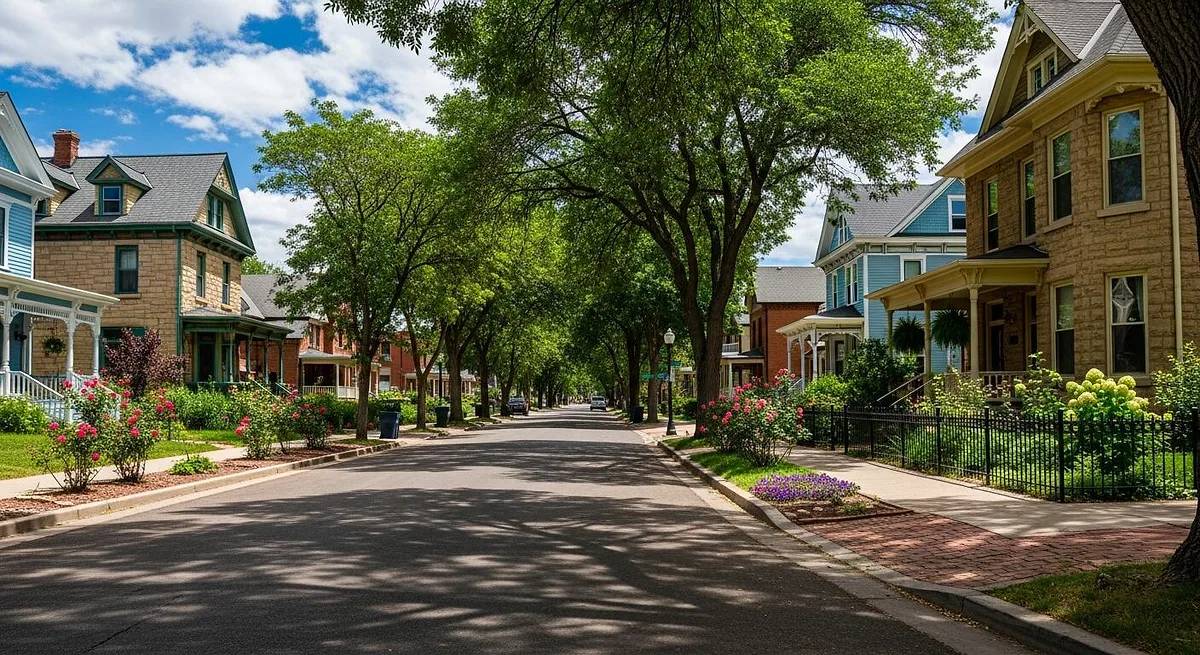
Erie is largely a town of family homes, and households here tend to be on the larger side. That usually means a range that handles breakfast, school-night dinners and weekend baking without much rest. When one burner won't catch or the oven drifts cold, you start juggling pans, rearranging meals and waiting on the microwave. We repair ranges and stoves in single-family houses, condos and rentals, from freestanding models to slide-in and pro-style units.
We're a small, family-run business based on S Rock Creek Pkwy in Superior, just a quick drive from your kitchen. A range deserves careful work because it combines gas lines or heavy electrical current with open heat in the most crowded room of the house. A guess at the wrong part wastes your money, and a rushed fix on a gas valve or terminal block can create a new hazard. So your technician tests first, explains what failed, and quotes a firm price before any repair begins, using genuine OEM parts.
Right Now
Act First, Repair Later: Range Emergencies
These steps follow general gas and fire safety practice and come before any thought of service.
#1
Cooking is the leading cause of home fires and fire injuries
37%
Nonconfined cooking fires where unattended equipment was the leading factor
- 1You smell gasGet everyone, pets included, out of the house right away, and don't flip switches, use appliances or do anything that could make a spark. After you're outside, call 911 or your gas utility. Wait for the all-clear before going back in, and only then schedule a repair.
- 2A burner won't shut offTurn the knob firmly to off and see whether it stops. If it doesn't, shut off power at the breaker for an electric range, or close the gas shutoff valve behind a gas range if you can reach it safely. If you can't do either safely, leave the house and call for help from outside.
- 3A pan catches fireTurn off the heat and smother the flames by sliding a lid or baking sheet over the pan. Leave the cover on until the pan has cooled completely. Don't ever throw water on a grease fire or try to carry the burning pan outdoors.
- 4Stay at the stoveThe U.S. Fire Administration reports that cooking is, by far, the leading cause of home fires and home fire injuries. Leaving cooking unattended was the leading factor in nonconfined home cooking fires, accounting for 37% of them. USFA's advice is simple: stand by your pan, and keep a lid or baking sheet within reach whenever you cook.
Common Problems
What Your Range Is Telling You
These causes reflect how ranges are generally designed. Your technician confirms the actual fault with testing in your kitchen before recommending any part.
Burner keeps ticking after it lights or with the knob off
- Likely causes
- Moisture or food residue on an igniter or spark switch is the usual trigger, along with a cap knocked off center or a spark module that is shorting.
- What we check
- We dry and inspect each igniter, test the spark switches behind the knobs with a meter, and check the module's output and wiring.
- Typical fix
- Often a thorough cleaning and drying solves it; if a switch or module has failed, we replace it with an OEM part.
Burner clicks and sparks, but the gas won't light
- Likely causes
- Clogged burner ports, a cracked igniter, or a cap and base that are misaligned can keep gas from meeting the spark. Low gas flow to that burner is another possibility.
- What we check
- We inspect the ports and igniter, verify the cap and base alignment, and confirm gas is reaching the burner.
- Typical fix
- Clearing the ports or reseating the burner fixes many cases, while a cracked igniter gets replaced.
Flame burns yellow, weak, uneven or lifts off the burner
- Likely causes
- Dirty ports, an air shutter out of adjustment or a damaged burner head can all distort the flame. At this elevation, a range that never received its high-altitude setup is another suspect.
- What we check
- We examine flame color and shape at each burner, clean and inspect the heads, and compare the configuration with the manufacturer's altitude instructions.
- Typical fix
- The usual repair is cleaning, adjustment or completing the altitude setup per the manufacturer, with a new burner head if one is damaged.
Electric coil or glass-top burner won't warm up
- Likely causes
- Most often, the cause is a burned-out element, a bad infinite switch, or a terminal block or receptacle that's loose or scorched.
- What we check
- We test element resistance, check the switch output and inspect the wiring connections for heat damage.
- Typical fix
- We replace the failed element, switch or receptacle and secure every connection so the new part doesn't burn out early.
Oven won't heat, takes too long to heat, or bakes unevenly
- Likely causes
- A weak gas oven igniter, a failed bake or broil element, a temperature sensor that has drifted out of range, or a stopped convection fan can each cause it.
- What we check
- We measure igniter current draw, test elements and the sensor, and watch the oven heat while checking actual temperature.
- Typical fix
- The failed igniter, element, sensor or fan motor is replaced, and we confirm the oven reaches and holds temperature.
Panel is unresponsive or showing an error code
- Likely causes
- A blank display or an error code can come from a failed control board, a stuck touchpad, a door lock problem or a loose connector behind the panel.
- What we check
- We look up the code for your model, inspect the connectors and test the board, keypad and lock circuit.
- Typical fix
- Reseating a connector sometimes clears it; otherwise we replace the faulty board, keypad or lock assembly.
Gas Burners & Igniters
What Happens Between the Knob and the Flame
Most cooktop complaints trace back to a few parts and how they are kept clean, aligned and set up. Here is what is going on and where your own work should stop.
When a Wipe-Down Starts the Ticking
On many gas ranges, turning one knob sends spark to every igniter at once, and a single wet switch can keep the whole cooktop ticking. Spills, steam and cleaning sprays all find their way down to the igniters or around the knob stems. Leaving the cooktop off and letting it dry completely clears a lot of these episodes. If the ticking continues after a full dry-out, a switch or module may have failed and it's time to book.
A Blue Flame Is a Healthy Flame
A properly burning gas flame is mostly blue with steady, even cones around the whole burner. Yellow tips, a lopsided ring or flames that lift and flutter suggest blocked ports, a cap sitting crooked or air adjustment that's off. You can safely lift each cap once the range is cool and set it back flat and centered. Adjusting air shutters or orifices, though, is work for your technician.
Altitude Setup and Sealed Pro Burners
Manufacturers publish high-altitude instructions for many gas ranges because thinner air changes combustion, and skipping them can leave flames weak or unstable. Sealed burners, common on newer and pro-style ranges, keep spills out of the range body, but the base, cap and igniter have to line up precisely. A cap from a different burner or a slightly bent base can be enough to cause trouble. Your technician checks both the setup and the fit of each part.
Electric Coils, Radiant Tops and Your Limit
Coil elements plug into receptacles and lift out for cleaning once cool, and a loose or charred receptacle is a common reason a coil quits. Radiant elements sit under a glass top and are controlled by switches or a board you cannot reach without removing panels. Never use a glass top that is cracked, and never open the back of a range that is still plugged in or hard-wired to power. Burning smells, scorched connections or any wiring work mean it's time to call.
From Our Own Jobs
Real Range Repairs From Our Own Jobs
Real photos from our own service calls around the Denver Metro Area — not stock images.
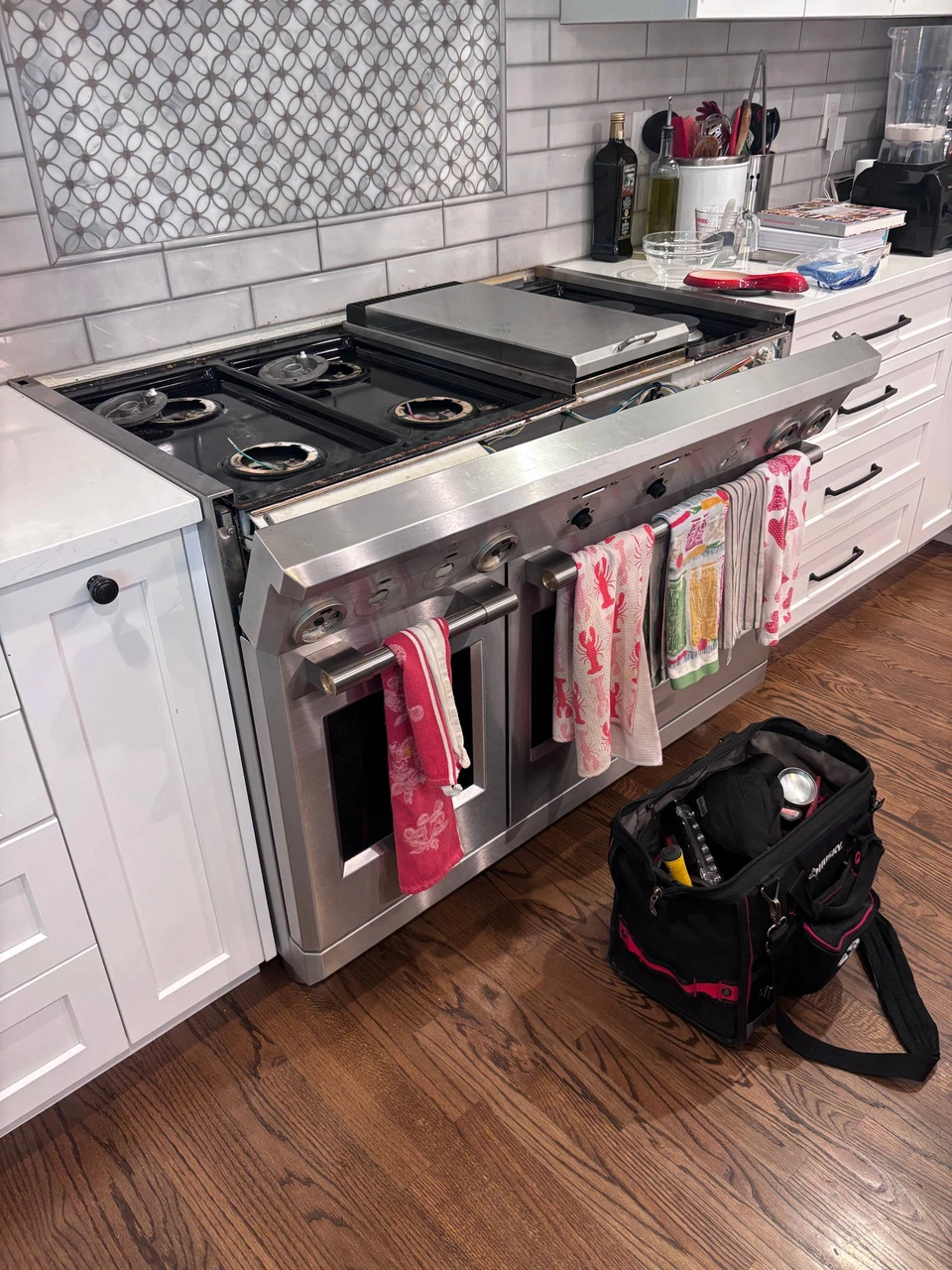
Pro-style range opened up — burners and controls 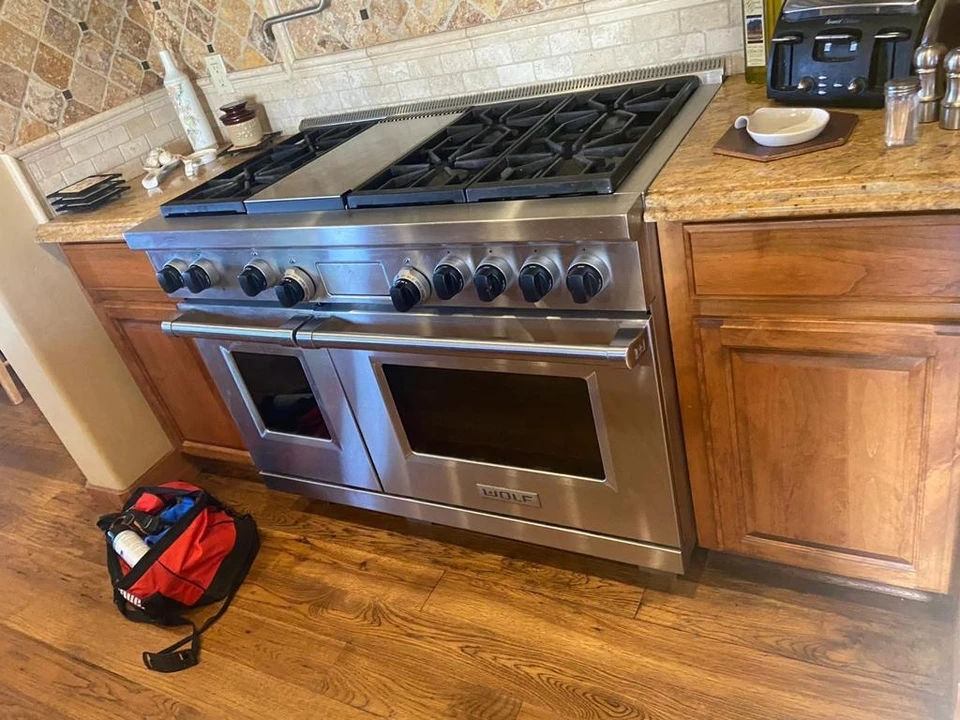
Wolf range with a griddle 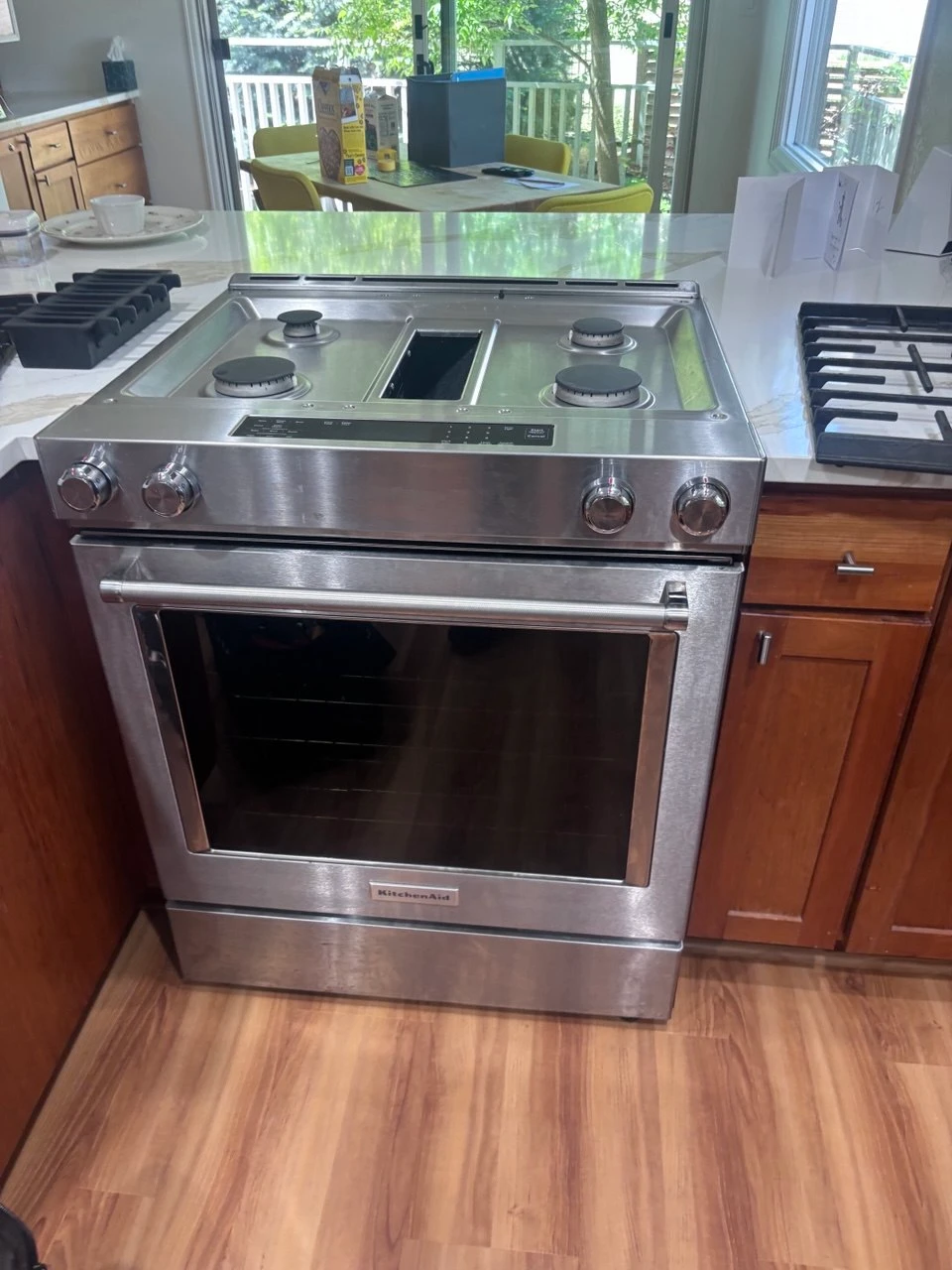
KitchenAid slide-in range, grates off for service
Recognize the Problem?
Book Range & Stove Repair in Erie
Tell us what's happening — we'll call you back to confirm a time.
(720) 285-3573Erie Homes
How This Town Shapes Range Service
Three details about the town tell your technician where to look first.
Kitchens From the Growth Years
Many Erie homes went up after 2000 as the town grew, which means plenty of kitchens still have the original range that came with the house. In general, the parts that wear first on a range are the hardworking ones: igniters, spark switches, bake elements and oven door gaskets. Those are usually replaceable on their own, which makes an original builder-grade range a reasonable repair candidate. Your technician reads the model and serial number to confirm parts availability before quoting.
Full Houses, Busy Cooktops
Many households in Erie are married couples, and most of the homes in town are family homes. More cooking means more boil-overs, more grease in burner ports and more turns of every knob, which is exactly what wears spark switches and clogs gas passages. A range in a busy kitchen also gets its oven door opened and closed constantly, loading the hinges. We keep that heavy daily use in mind when we inspect wear points beyond the part you called about.
Flames at About 5,100 Feet
Erie sits at about 5,100 feet, and thinner air changes how gas mixes and burns. Many manufacturers publish specific high-altitude instructions for their gas ranges, covering items like burner orifices or air adjustment. A range installed without that setup can produce flames that lift, flutter or look weak. Checking the altitude configuration is part of how your technician evaluates any gas range complaint here.
Error Codes
Range Error Codes by Brand
Official codes from each manufacturer, with what to try first, are on our range & stove repair page. Common ones at a glance:
GE · Monogram
F1 · F2 · F3 and more
Samsung
door · -dE- · C-24 and more
Bosch
e011 · e005 · e101 and more
Dacor
C-d0 · C-d1 · C-21 and more
Thermador
E · E0211 · E11 and more
Wolf (range)
Err · Err · Err and more
Wolf (wall oven)
F1 · E10 · E17 and more
Repair or Replace?
Keeping an Older Range Versus Buying New
The typical lifespan from an NAHB study, shown next to this section, is a helpful reference, but the condition of your range matters more than the date on its label. A sound range with a failed igniter, element or switch is usually worth repairing, since those parts are designed to be replaced. The calculation shifts when the repair cost approaches the price of a comparable new unit, or when the range has several problems at once. You'll get a firm quote from your technician, so you can compare the numbers honestly.
Some factors push toward repair. Slide-in, built-in and custom-paneled ranges are fitted to the countertop and cabinets around them, and a replacement may not fit the opening without extra work. Others push toward replacement: parts that are no longer made, a cracked cooktop on a model that's hard to source, or a desire for better energy performance or features like induction. We'll tell you plainly which side your range falls on.
Typical range lifespan
~13–15 yrs
Source: NAHB study, electric–gas. Real life varies with brand, use and maintenance.
Built-In & Luxury
Heavy-Duty Ranges with Griddles, Grills and Sealed Burners
Our technicians work on pro-style and dual-fuel ranges from Wolf, Thermador, Viking, Dacor, Monogram, JennAir and Miele. These ranges often combine high-output sealed burners with built-in griddles or grills, and each of those features has its own burners, igniters and controls. A dual-fuel range pairs a gas cooktop with an electric oven, so a single visit can involve gas diagnostics and electrical testing. Your technician works through each system rather than assuming the fault sits in the obvious place.
Pro-style ranges are heavy, and their oven doors, hinges and gaskets are built to match, so we handle and adjust them with care to protect your floors, cabinets and countertops. Genuine OEM parts matter here, because burner heads, igniters and door components are engineered for that specific model's heat output and fit. A generic part that almost fits can lead to uneven flames or a door that won't seal. We source the correct part and confirm the range works properly before we leave.
Before You Call
Try These Before You Schedule
- 1Look at the breaker and the plugA tripped breaker or a cord that worked loose can make an electric range look dead, and a gas range still needs power for its spark and clock.
- 2Turn off any control lockA lock, Sabbath mode or delayed-start setting can make the keypad or oven seem unresponsive when nothing has actually failed.
- 3Give a wet cooktop timeAfter a boil-over or a thorough cleaning, let the burners and igniters dry fully before deciding an igniter or switch has gone bad.
- 4Settle each burner capWith the range off and cool, lift every cap and set it back flat and centered on its own base so all the ports line up.
- 5Set the clock after an outageSome ranges won't run the oven until the clock is reset following a power interruption, so check the display before assuming a fault.
Brands
Range Brands We Work On
From everyday freestanding ranges to premium dual-fuel and induction models, your technician works across the major brands. Pick your brand below to see model notes and common error codes.
What to Expect
Your Range Appointment From Start to Finish
Your technician shows up within your scheduled window, asks what you've been noticing, and checks the burners, igniters, elements and controls until the actual fault is confirmed. You get a firm quote before any work begins, and once you approve, we repair the range with genuine OEM parts and run it with you to make sure every burner and the oven perform as they should.
- Diagnostic visit
- $85Credited toward the repair if you go ahead
- Your price
- Firm quoteApproved by you before any work
- Warranty
- 90 daysParts and labor
- Parts
- Genuine OEMMatched to your model number
Google Reviews
What Our Customers Say
5.0Every review on Google is five stars.
“Nick came the same day I called! Had my oven door handle and gas stove fixed up in a jiffy, all with great communication and a friendly and helpful attitude. I'll definitely be calling him again for any appliance repair needs I have in the future.”
Suzanne N.September 2026 · Google “Nick was here today to fix a very old dryer and a newer stove. He arrived on time, was efficient, friendly, tidy and very reasonably priced. Having an older home, we've had many repairman over the years, this is one I would absolutely recommend!”
Joanne L.June 2026 · Google “They were great! Helpful, responsive and communicative. Highly recommend and will definitely use them again when I have an issue.”
Andrew T.September 2026 · Google
Membership
PointLine Care Club
One service call is $85. For $99 a year, every service call is free.
- Free service calls all year — no $85 fee
- 1 free maintenance visit a year
- 10% off labor on every repair
$99/ year
One household · renews yearly · cancel anytime before renewal
Property manager or landlord? See our Property Care Club →
Service Area
Erie ZIP Codes We Serve
Range & Stove Repair at homes, condos and rentals in every part of Erie.
- 80516
- 80504
- 80026
Including Old Town Erie, Vista Ridge, Colliers Hill, Flatiron Meadows, Candlelight Ridge.
FAQ
Your Stove and Range Questions Answered for Erie Households
Range questions from Erie homeowners.
Does your service area cover 80516, 80504 and 80026?
Yes, all three ZIP codes are in our service area. 80516 is the town's main ZIP, while 80504 and 80026 are shared with nearby communities. We serve homes on both the Weld County and Boulder County sides, including Vista Ridge, Colliers Hill, Flatiron Meadows and Candlelight Ridge.
Can you reach a home near Old Town Erie around Briggs Street?
Yes, the historic downtown around Briggs Street is within our service area. Homes there range from older properties to newer ones, and older kitchens can have gas shutoffs or connectors in awkward spots. Your technician checks the connection and shutoff along with the range itself.
Flames on our gas cooktop look tall and yellow; is the elevation to blame?
It might be, but dirty ports or a crooked cap can cause the same thing. At about 5,100 feet, a gas range may need the high-altitude setup the manufacturer specifies, and one that never got it can burn poorly. Your technician checks cleanliness, cap fit and the altitude configuration before recommending anything.
Who should book a range repair in a rental home?
Usually the owner or property manager books and approves the repair, since they are paying for it. A tenant can share symptoms and provide access, and we give the firm quote to whoever authorizes the work. Agree on that arrangement ahead of time so the repair isn't delayed.
Is the slide-in range that came with our newer house worth fixing?
In many cases, yes, because a slide-in range is fitted to the counter and cabinets and replacing it may mean extra work. Igniters, elements and switches on these models are typically replaceable. Your technician checks parts availability and gives you a firm quote so you can decide.
One oven element shows a bright spot but still heats; can it wait?
It's better to book soon rather than wait. A bright spot or blistering on an element usually means it is close to failing, and it can burn through with sparks. Please don't use the oven until it's been inspected.
More in Erie
Other Repairs We Handle in Erie
- Refrigerator Repair in Erie
- Freezer Repair in Erie
- Ice Maker Repair in Erie
- Wine Cooler Repair in Erie
- Washer Repair in Erie
- Dryer Repair in Erie
- Dryer Vent Cleaning in Erie
- Dishwasher Repair in Erie
- Oven Repair in Erie
- Wall Oven Repair in Erie
- Cooktop Repair in Erie
- Microwave Repair in Erie
- Range Hood Repair in Erie
- Garbage Disposal Repair in Erie
- Commercial Appliance Repair in Erie
Want every burner lighting on the first click?
Schedule a visit online or reach us by call or text at (720) 285-3573, and your technician will test the range and price the repair before picking up a tool.